

How GPS Devices Help With Course Management and Shot Strategy
Explore how GPS golf devices enhance course management and shot strategy by providing real-time distance data, hazard alerts, and club recommendations.
GPS
Golf Tech Buzz Editorial Team - Led by AJ “Buzz” Eichman
5/11/20267 min read
If you’ve ever found yourself guessing the distance to that tucked-away bunker or debating whether to hit a 7-iron or a pitching wedge, you’re not alone. I’ve seen guys try and wing it more times than I can count, usually resulting in a chunked shot or a ball lost in the rough. Here’s the deal: GPS golf devices aren’t just fancy gadgets—they’re smart tools that bring real muscle to your course management and shot strategy. They’re like having a caddy who never forgets a yardage and doesn’t mind being asked twice for the distance to the pin.
Whether you're navigating a new course or trying to shave strokes off your home track, GPS technology gives you accurate yardages, hazard alerts, and shot data—all in real-time. And when you combine that with solid course knowledge, you’re not just counting yards; you’re making smarter decisions that ripple through your entire round. A strong Golf Technology Guide can also help golfers understand how GPS data fits into the broader world of modern golf tech and performance tracking. Let me walk you through what makes these devices game-changers and how you can squeeze the most out of them.
Quick Verdict
• GPS golf devices provide precise distance measurements to hazards, greens, and other course features, helping you plan shots better.
• Many devices offer club recommendations and hazard warnings, boosting your shot strategy.
• Using GPS data improves course navigation, lowers scores by aiding smarter play, and helps track strengths and weaknesses.
• Regularly updating device maps and combining GPS with your own experience makes for the best results.
What Are GPS Golf Devices and How Do They Work?
First off, understanding what a GPS golf device actually does is key. These gadgets use satellite signals—think of it like your phone’s GPS but tailored specifically for golf courses—to figure out your exact position on the course. From there, they calculate the distances to greens, hazards, tee boxes, and other landmarks.
You’ll find these devices as standalone handheld units, watches, or smartphone apps. The neat thing is their course maps are preloaded or downloaded, so when you’re stalking that tricky par 4, you’re not guessing but actually seeing real-time yardages. Accuracy usually falls within 1 to 3 yards, though heavy tree cover or steep elevation changes can throw off readings slightly.
Golfers still trying to decide between wearable GPS systems and laser devices should also check out Garmin Watch vs Rangefinder: Which is Best for Your Golf Game? since both technologies approach course management very differently.
Key Features of Golf GPS Devices for Course Management
Alright, so what should you look for when you’re in the market? Here’s what separates the decent from the must-have:
Precise Yardages
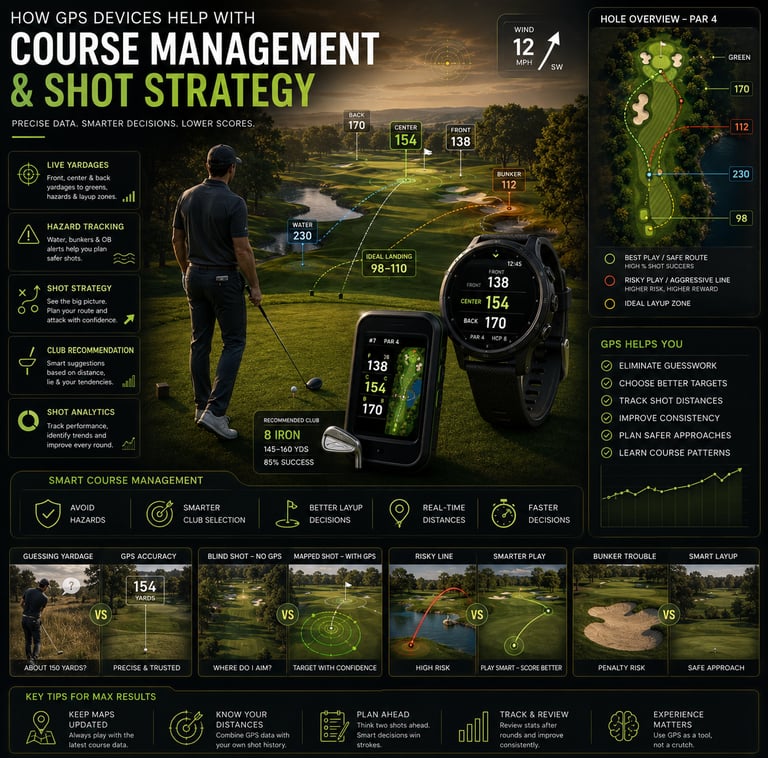
The core benefit—getting the exact distance to the front, center, and back of the green, plus nearby hazards. This helps you decide if you’re bombing a driver, laying up, or dialing in a wedge.
Hazard and Layup Alerts
Many GPS devices highlight trouble spots before you get there—water, bunkers, out-of-bounds markers—so you can think two shots ahead.
Club Recommendations
Some models even crunch the numbers on your past performances and recommend the best club for your next shot, especially helpful if you’re new to course management.
Shot Tracking and Analysis
More advanced devices track your shot distances and patterns, giving you data to see where you’re crushing it—and where you need work.
Live Updates and Score Integration
Handy if you’re competitive. Some devices sync with apps that record your score and stats as you play, so you’re not scribbling nervously on a scorecard.
If you want a breakdown of the top devices currently available, exploring Best Golf GPS Devices is a good place to compare different GPS watches, handheld systems, and advanced golf navigation tools.
Improving Shot Strategy with Accurate Distance Measurements
If I’m being honest, I’ve been on the receiving end of those “I thought it was 150 yards” shots, and they usually don’t turn out well. Accurate distance measurement is the bedrock of good shot strategy.
Knowing exactly how far you are from the pin allows you to pick the right club and swing with confidence. It also helps you avoid those costly errors—like going for a risky shot over water when you really should lay up.
GPS data helps eliminate guesswork, meaning fewer wasted shots and smarter risk-reward decisions. You see the numbers; you choose your target accordingly.
Many golfers underestimate how much accuracy impacts confidence during decision-making. Understanding Understanding GPS Accuracy in Golf GPS Devices can help explain why some systems perform better than others during real-world play.
Navigating the Golf Course More Effectively Using GPS
Ever pulled up to a blind shot and thought, “Man, where’s the best place to land this?” GPS makes course navigation less of a needle-in-a-haystack situation and more like having a roadmap in your back pocket.
You can view the layout, spot hazards, understand doglegs, and plan your route through holes. This bird’s-eye view encourages smarter play instead of just bombing drives and hoping for the best.
Plus, GPS watches are gold here because they give you instant data without fumbling for your phone or handheld unit mid-swing. Quick info means you keep your rhythm while still making informed decisions.
Choosing the Right GPS Device for Your Game and Budget
Look, not all GPS devices were created equal, and choosing the wrong one can be a waste of your time and money. Here’s how to pick what works for you:
Handheld vs. Watch
Handheld units have bigger displays and often more features, perfect if you want detailed course maps and don’t mind a slightly bigger device.
Watches are convenient and quick but sometimes with smaller screens and fewer bells and whistles. Ideal for players who want speed and ease during tight rounds.
Skill Level
If you’re a beginner or mid-handicap player, a device with club recommendations and layup distances can be a game-changer.
Low-handicap players often want shot tracking and advanced stats to fine-tune their game.
Budget Considerations
You can find decent GPS watches and handhelds under $200, but higher-end gear can cost $400 or more—worth it if you want every feature, but not necessary for casual players.
Device Update and Compatibility
Make sure the device supports frequent course map updates and syncs with your phone or computer if you want to analyze data after the round.
Golfers debating between wearable GPS devices and larger handheld systems may also benefit from reading GPS Watch vs Handheld GPS: Which Works Better on the Course? before committing to one style.
Common Mistakes Golfers Make When Using GPS
I’ve seen plenty of golfers blindside themselves by misusing these tools:
Relying Solely on Distance
Golf isn’t just numbers—ignoring lie, wind, elevation, and course conditions can cost you dearly.
Skipping Device Updates
Course layouts change, and if your GPS isn’t running current maps, you’re rolling the dice on accuracy.
Ignoring Terrain and Elevation
Most GPS devices show flat yardages. If you’re on an uphill or downhill shot, adjust accordingly—don’t expect the gadget to read your mind.
Using GPS as a Crutch
These devices complement your skills; they don’t replace knowing the course or practicing shot execution.
Choosing Devices That Don’t Fit Your Play Style
A beginner drowning in advanced stats is like a fish out of water. Pick something that matches your needs—not just the sexy features.
Integrating GPS Data with Practice and Course Experience
GPS devices are no magic wand—they work best when combined with actual on-course experience and practice. Use your GPS insights to shape your range sessions—practice those distances you struggle with, and work on club selection under real conditions.
When you pay attention to the data, you spot patterns. Maybe you always push your 150-yard shots or can’t get out of the bunker when less than 100 yards out. Fix those weak spots and watch your strategy sharpen.
Ask your pro to incorporate GPS data into lessons—it can offer a level of precision and feedback that traditional coaching misses.
Golfers looking to blend GPS insights with additional golf technology may also want to explore Do GPS Devices Improve Your Golf Game? for a broader look at how these systems affect consistency, confidence, and scoring.
FAQs About Golf GPS Devices and Their Benefits
How do GPS golf devices measure distance accurately?
They use satellite signals to triangulate your precise location, then calculate distance to mapped course points; typical accuracy ranges within 1-3 yards.
Can GPS devices improve my golf course management skills?
Absolutely. By providing real-time yardages and hazard info, they help you plan shots smarter, avoid risks, and make better club choices.
What features should I look for when buying a golf GPS device?
Look for precise distance measurement, hazard alerts, ease of use, battery life, and features like shot tracking or club recommendations based on your needs.
How often should I update the GPS course data?
Ideally before each season or whenever you play a new or updated course, to ensure map accuracy and reliable distance info.
Are GPS watches better than handheld GPS units for golf?
Watches offer quick access and convenience; handhelds provide more detailed info. Your choice depends on your preference for screen size, features, and play style.
How can GPS help with club selection on the course?
Some devices analyze your shot distances and suggest which club suits each yardage, removing guesswork and improving consistency.
Do GPS devices work on all golf courses worldwide?
Most devices support thousands of courses globally, but always check if your local or travel courses are included or available for download.
Is GPS more reliable than traditional laser rangefinders?
Both have merits; GPS excels in quickly providing distances to multiple targets simultaneously and offers extra data like hazard locations, while laser rangefinders provide pinpoint accuracy on specific targets but need a clear line of sight.
Conclusion
Here’s the bottom line: GPS golf devices aren’t just flashy gadgets—they’re practical tools that can genuinely improve your course management and shot strategy if you use them right. They give you real-time info that strips away guesswork, helping you make decisions like a pro rather than a gambler.
But remember, they’re not a substitute for knowledge, practice, or paying attention to the course conditions. Use them as a supplement to your game, update them regularly, and combine their data with your own feel and experience.
If you’re serious about sharpening your course management and lowering your scores, investing in a good GPS device—and learning to use it properly—is one of the smartest moves you can make. Golfers still comparing GPS systems against laser technology should also review How Golf Rangefinders Work: Laser vs GPS Technology and Best Golf Rangefinders to better understand which style of distance technology best fits their game. Now go out there, break 80, and maybe celebrate with a cigar—just don’t blow smoke on your GPS.
© 2026 GolfTechBuzz. All rights reserved.
Golf Tech Buzz
Performance Through Data
Practical guides, real-world setups, and unbiased comparisons for golfers building smarter practice environments.
General Inquiries: