
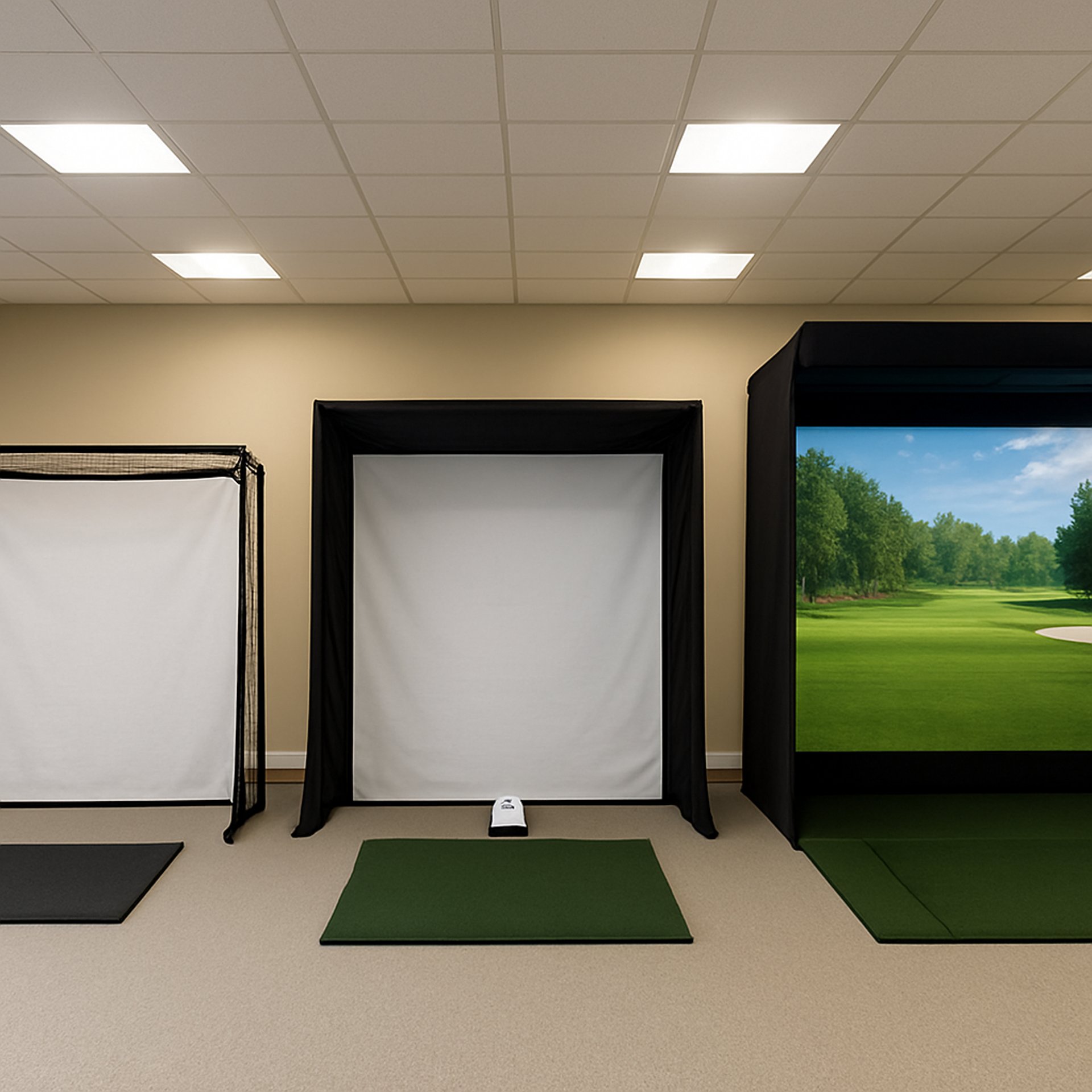
Best Golf Impact Screens for Simulators
(What Actually Works for Real Setups)
Building a golf simulator isn’t just about launch monitors — the impact screen is what makes or breaks the experience, and understanding how everything works together inside Golf Simulators is what separates a clean setup from a frustrating one.
Most golfers underestimate this part of the setup. They’ll spend money on tracking tech, then hang a cheap sheet behind it and wonder why the experience feels off.
The reality is simple:
A good impact screen controls bounce-back, noise, durability, and image quality — all at the same time.
This guide breaks down the best golf impact screens based on real home simulator builds, not marketing claims.
Transparency Note: We may earn a commission from qualifying purchases. Product selections are made independently and are not influenced by manufacturers.
Quick Verdict
If you want the best balance of projection quality, durability, and overall simulator performance, the SimSpace Elite is the strongest all-around option for most home golf setups.
If safety, garage installation, or heavier-use environments matter most, the Aerixtron stands out with its fire-resistant construction and reinforced build quality.
If you want the most affordable entry point into simulator builds, the aikeec delivers solid projection support and usable impact resistance without pushing premium pricing.
If your priority is repeated practice sessions and long-term durability, the KHAMPA is the better fit for high-use simulator environments and stronger ball speeds.
The biggest mistake is thinking an impact screen is just “something to hit into.”
That’s how people end up with:
Dangerous bounce-back
Torn screens after a few weeks
Poor image quality that ruins immersion
Another common issue is buying based on price alone. Cheap screens might look fine online, but they’re often too thin to safely handle real golf balls. Most of that comes down to not understanding screen materials, and knowing What Material Is Best for Impact Screens helps you avoid cheap screens that fail fast under real ball speeds.
There’s also the problem of mismatched setups. A great launch monitor won’t fix a bad screen — and a bad screen can completely ruin a good simulator.
Why Most People Choose the
Wrong Impact Screen
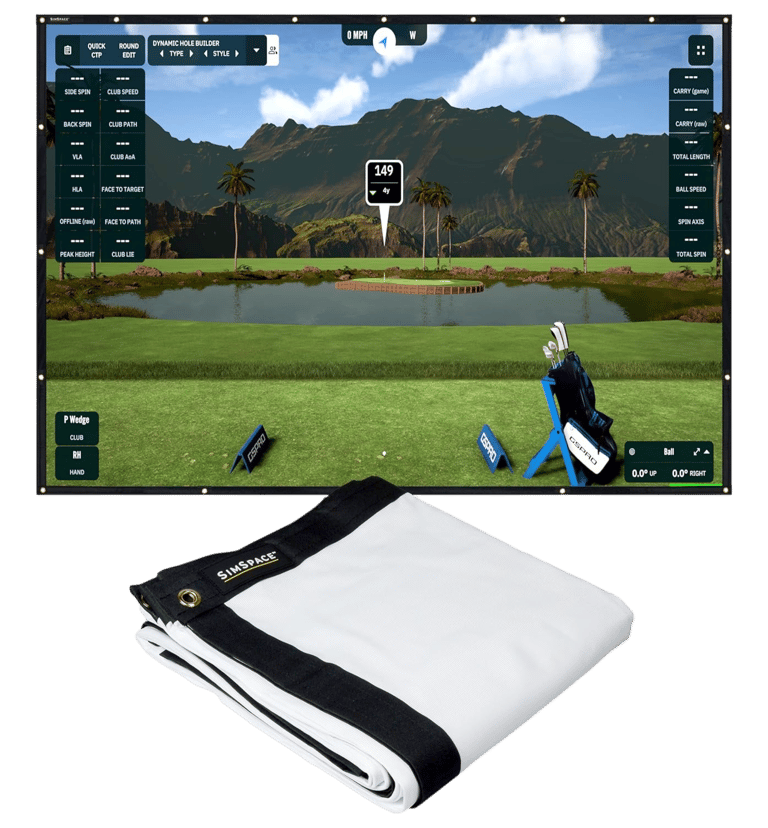
SimSpace Elite Impact Screen
Best For:
• Premium golf simulator builds
• High-quality image projection
• Indoor simulator rooms
• Balanced durability and visuals
• Realistic simulator experience
Specs (Quick Breakdown)
• Material: Multi-layer woven impact fabric
• Focus: HD projection clarity + ball impact absorption
• Noise Level: Reduced bounce-back design
• Use Case: Indoor golf simulator enclosure
• Sizes: Multiple aspect ratio options available
• Compatibility: Works with launch monitors & projectors
• Installation: Grommet-style mounting
• Surface Type: Smooth projection finish
• Build Focus: Image clarity + durability balance
Why This Wins
The SimSpace Elite stands out because it balances projection quality, durability, and impact handling better than most budget screens. The tighter projection surface produces cleaner simulator visuals while still managing repeated ball strikes without excessive bounce-back.
It feels closer to a dedicated simulator studio screen rather than a basic practice net with projection support.
If you're running this in a tighter space, adding protection like explained in Do You Need a Backing Net for Impact Screens can help reduce wear and prevent damage behind your setup.
BUZZ PICK
SimSpace Elite Impact Screen
Best Budget
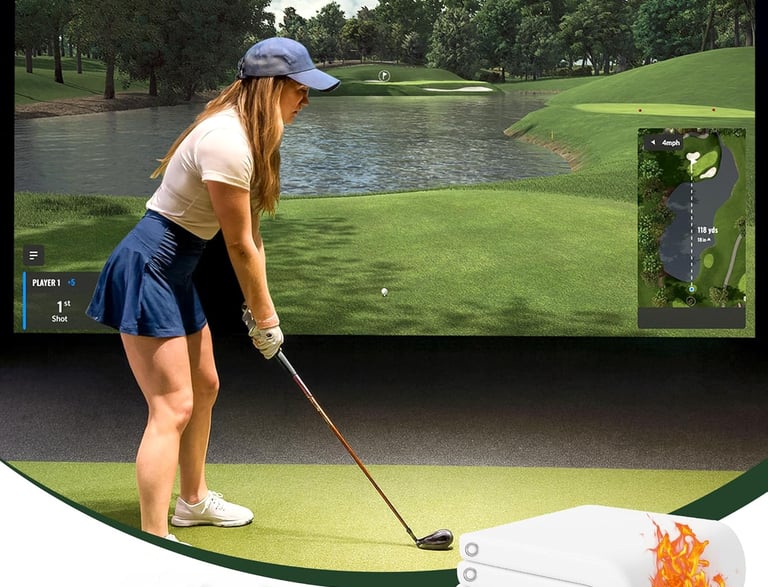
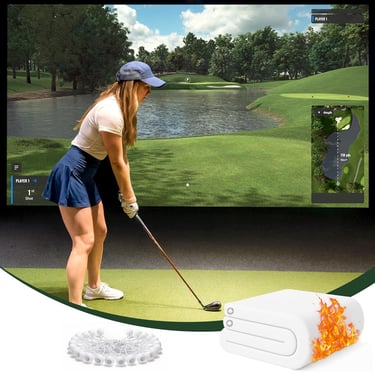
Aerixtron Fireproof Simulator Impact Screen
Best For:
• Garage simulator builds
• Commercial-style setups
• Users wanting fire-resistant materials
• High-use simulator environments
• Enclosure-based installations
Specs (Quick Breakdown)
• Material: Fireproof reinforced impact fabric
• Safety Feature: Flame-retardant construction
• Projection Support: HD simulator projection compatible
• Installation: Reinforced edge mounting
• Durability Focus: High-impact resistance
• Use Case: Indoor simulator rooms & garages
• Noise Control: Reduced impact noise design
• Surface Style: White projection surface
• Compatibility: Launch monitor friendly
Why This Wins
The Aerixtron separates itself with fire-resistant construction while still functioning as a true simulator impact screen. That makes it attractive for garage installs, enclosed builds, or heavier-use spaces where durability and material safety matter more long term.
It leans more toward utility and protection than ultra-premium projection refinement.
At this level, pairing your screen with the right enclosure matters, and comparing setups like Impact Screens vs Impact Screens With Enclosure helps you get the most out of a premium build.
BUZZ PICK
Aerixtron Impact Screen
Best Fireproof Build
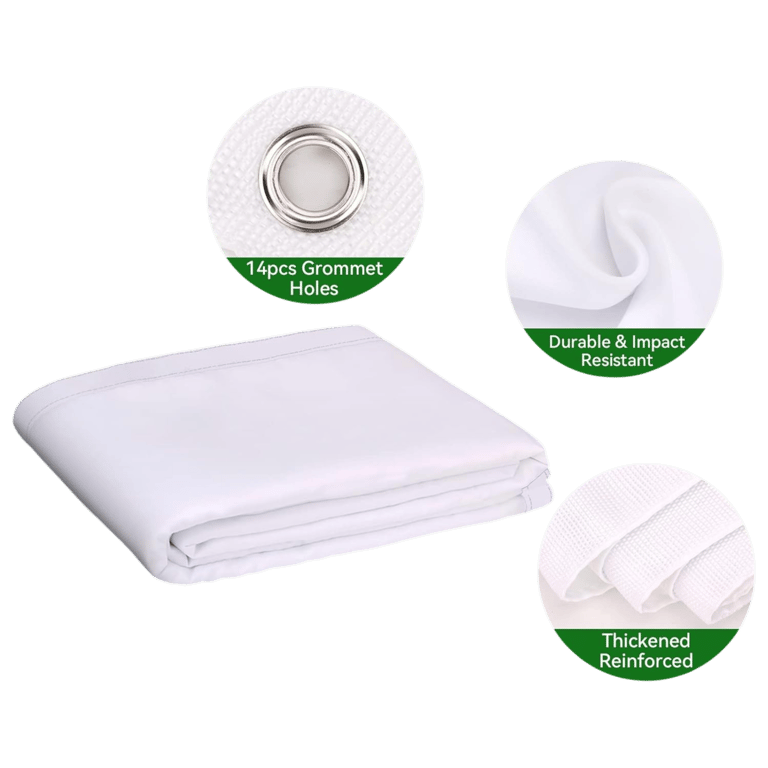
aikeec Golf Simulator Impact Screen
Best For:
• Entry-level simulator builds
• Budget golf setups
• Garage practice spaces
• DIY enclosure systems
• Casual simulator use
Specs (Quick Breakdown)
• Material: Polyester impact screen fabric
• Focus: Budget-friendly simulator projection
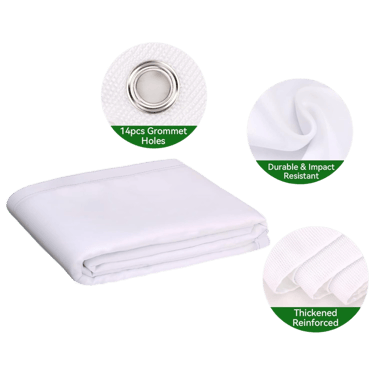
• Installation: Grommet mounting system
• Compatibility: Indoor golf simulator setups
• Surface Type: White projection material
• Use Case: Practice + simulator projection
• Aspect Ratios: Multiple sizing options available
• Bounce Reduction: Flexible hanging design
• Portability: Lightweight structure
Why This Wins
The aikeec works because it lowers the entry barrier for simulator builds. You still get a usable projection surface and impact resistance without spending premium enclosure money.
It is not the quietest or most refined screen, but for first-time simulator rooms or casual setups, it covers the fundamentals well.
BUZZ PICK
aikeec Golf Impact Screen
Best Budget Pick
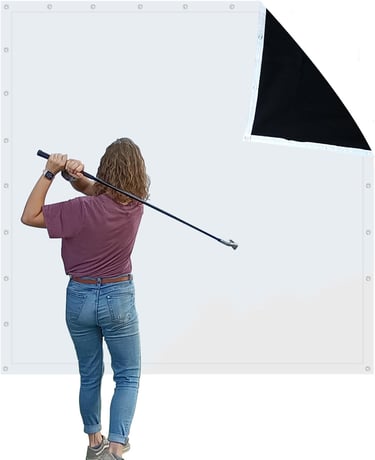
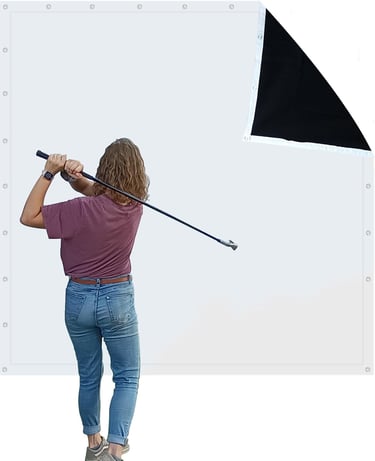
KHAMPA Golf Simulator Impact Screen
Best For:
• Frequent simulator practice
• Higher ball-speed players
• Garage golf studios
• Larger enclosure builds
• Long-term impact durability
Specs (Quick Breakdown)
• Material: Heavy-duty woven impact fabric
• Durability Focus: Repeated golf ball impact resistance
• Projection Support: HD projector compatible
• Installation: Reinforced grommet edges
• Use Case: Indoor simulator enclosures
• Surface Finish: Smooth white projection surface
• Bounce Control: Flexible hanging absorption
• Compatibility: Launch monitor simulator systems
• Build Style: Practice-focused durability
Why This Wins
The KHAMPA focuses more aggressively on durability and repeated impact handling than lightweight entry-level screens. It is built for users hitting frequently, practicing harder, or running simulator sessions regularly.
The heavier material design helps absorb force better during extended use while still maintaining respectable projection quality.
BUZZ PICK
KHAMPA Golf Impact Screen
Best for Durability
What Actually Matters in an Impact Screen
Durability
This determines how long your screen lasts under real ball speeds.
Thin screens wear out fast — especially with drivers.
Bounce-Back Control
One of the most important (and overlooked) factors.
Better screens absorb energy instead of sending the ball back at you.
Image Quality
If you’re using a projector, this matters more than you think.
Higher-quality fabric produces a sharper, more immersive image.
Noise Level
Some screens are significantly louder than others.
This becomes a big deal in garages or shared spaces.
Higher-quality fabric produces a sharper, more immersive image, and choosing the right build starts with understanding What Material Is Best for Impact Screens.
How to Choose the Right Impact Screen
Budget Builds
Go with a reinforced budget screen like Aikeec.
Avoid ultra-cheap options unless you’re using foam balls.
Mid-Range Setups
KHAMPA offers a good balance between durability and cost.
Serious Simulator Builds
Invest in a premium screen like SimSpace Elite.
This is where the experience starts to feel real.
Thin screens wear out fast — especially with drivers, which is why understanding Impact Screen Durability Explained is critical before choosing your setup.
Better screens absorb energy instead of sending the ball back at you, and setups that incorporate guidance from Do You Need a Backing Net for Impact Screens can reduce rebound even further.
COMMON MISTAKES TO AVOID
Expecting a cheap screen to perform like a premium one
Ignoring bounce-back and safety
Not leaving enough space behind the screen
Buying based only on price
Skipping proper setup and tensioning
Frequently asked questions
Can you use a projector on any impact screen?
Yes, but not all screens perform the same. Lower-quality screens reduce image clarity, create light bleed, and can look washed out. Higher-quality impact screens produce a sharper, more realistic image.
How long do golf impact screens last?
It depends on material and usage. Budget screens may wear out within months under heavy use, while premium screens can last years. Ball speed, frequency, and setup all play a major role.
How much space do you need behind an impact screen?
Ideally, you want 12–16 inches of space behind the screen. This allows the material to flex and absorb impact properly, reducing bounce-back and improving safety.
Are impact screens safe for real golf balls?
Yes — if the screen is designed for it. Thicker, high-quality impact screens are built to handle real ball speeds. Cheap or thin screens can increase bounce-back risk and wear out quickly.
Do you need an enclosure with an impact screen?
Not required, but highly recommended. An enclosure helps control ball direction, protects your space, and improves the overall simulator experience. Without one, you’ll need to be more careful with setup.
What’s better — an impact screen or a net?
It depends on your goal. Nets are cheaper and safer for basic practice, while impact screens allow for a full simulator experience with a projector. If you're going ultra-budget, a net is often the better choice. If you're comparing both approaches, Impact Screens vs Impact Screens With Enclosure gives a clear breakdown of performance and protection differences.
Why do some impact screens bounce the ball back?
Bounce-back happens when the screen can’t absorb enough energy. This is usually caused by thin material or improper tensioning. Higher-quality screens and proper setup reduce this significantly.
Can you use foam balls with an impact screen?
Yes, but it’s usually unnecessary. Impact screens are designed for real golf balls. Foam balls are better suited for ultra-budget setups using nets or low-end screens where durability is a concern.
Quick Picks for Your Simulator


BUZZ PICK
SimSpace Elite
Impact Screen
Premium impact screen with strong HD projection
BUZZ PICK
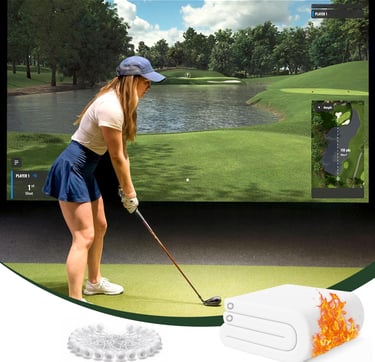
Aerixtron Fireproof
Impact Screen
Reinforced simulator screen with fireproof design
BUZZ PICK
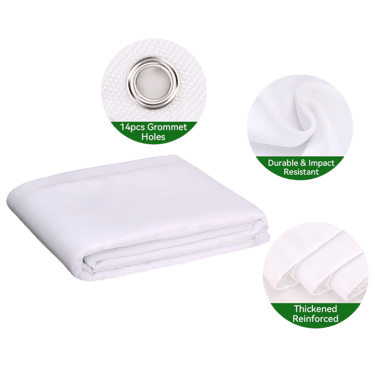
aikeec Golf
Impact Screen
Affordable simulator screen for DIY golf builds
BUZZ PICK
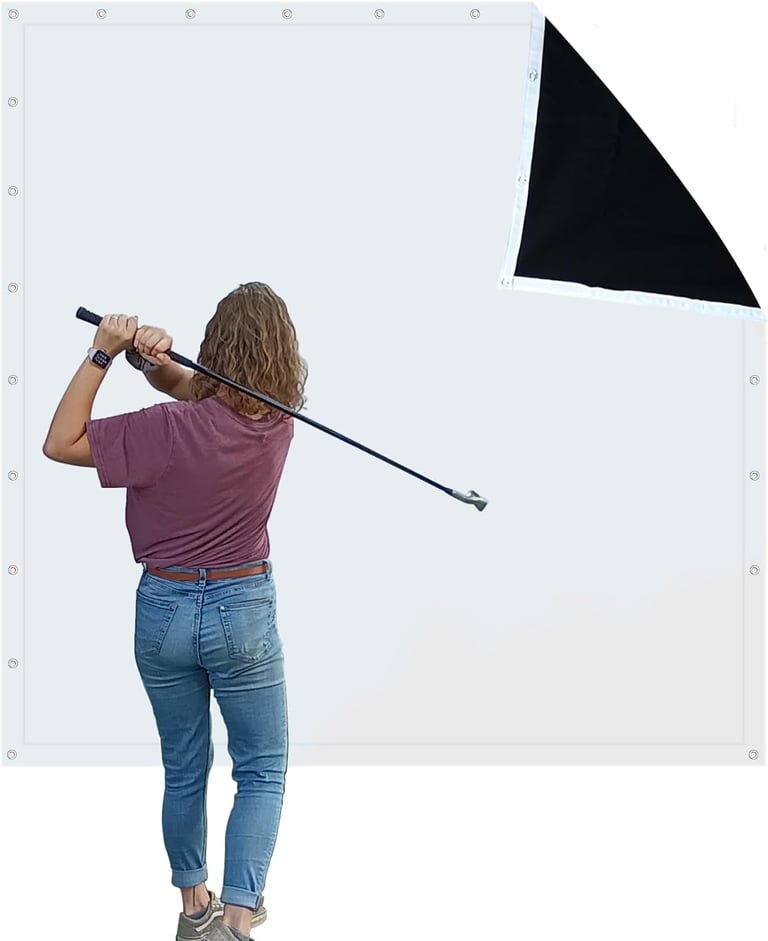
KHAMPA
Impact Screen
Heavy-duty impact screen for repeated simulator use
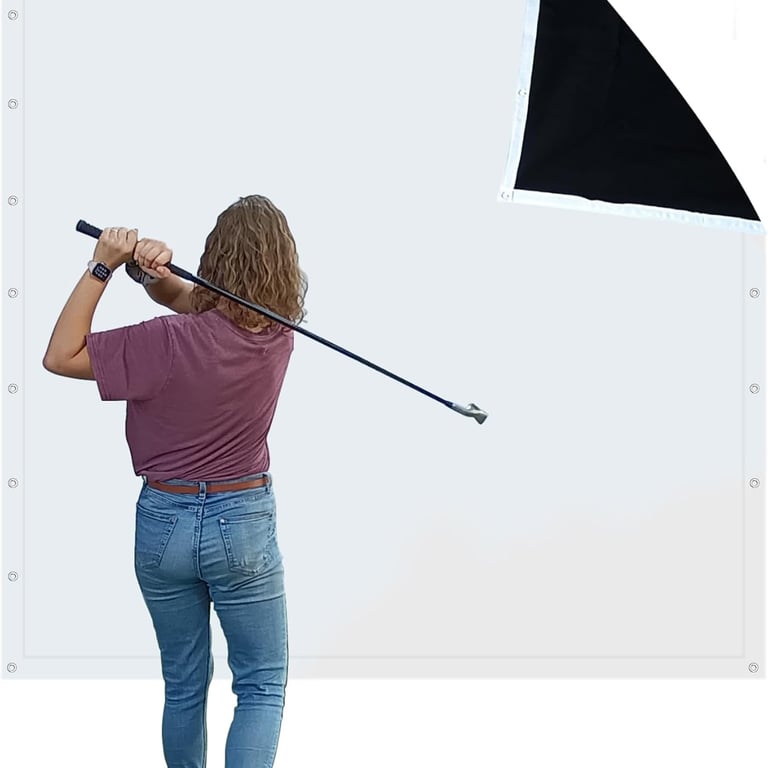

Final Verdict
Golf simulator impact screens are not just projection surfaces.
They directly affect image quality, bounce-back behavior, sound control, durability, and overall simulator realism.
The right screen depends less on marketing claims and more on how you actually use your simulator.
If your setup focuses on premium visuals and balanced everyday performance, the SimSpace Elite is the most refined overall system in this group.
If your simulator lives in a garage or higher-risk environment where material durability and safety matter more, the Aerixtron makes the most practical sense.
If you are building your first simulator room or trying to control total project cost, the aikeec keeps things accessible without sacrificing the core simulator experience.
And if your setup is built around heavy practice volume, faster swing speeds, or long-term durability, the KHAMPA is the stronger high-impact option.
At the end of the day, the best impact screen is not the one with the most hype — it is the one that fits your room, workload, projector quality, and practice style.
A simulator only feels realistic when the screen performs consistently under real use.
Where Do You Want to Go Next?
Choose your path based on what you need right now.
Explore Everything
Dive deeper into:
• golf simulator screen materials
• impact screen durability
• bounce-back reduction
• projector screen clarity
• enclosure setup planning
• simulator room optimization
This is the best place to better understand golf impact screens.
Compare Before You Buy
Trying to decide which golf impact screen fits your simulator best?
Compare:
• SimSpace Elite vs GolfSim Bay
• projection clarity and sharpness
• bounce-back and noise control
• material durability differences
• enclosure compatibility
If you simply want a premium golf simulator impact screen with strong projection quality and balanced durability:
Start with the SimSpace Elite Impact Screen.
Just Get It Done
© 2026 GolfTechBuzz. All rights reserved.
Golf Tech Buzz
Performance Through Data
Practical guides, real-world setups, and unbiased comparisons for golfers building smarter practice environments.
General Inquiries: