

Do Golf Hitting Mats Cause Wrist and Elbow Pain?
Explore how golf hitting mats impact wrist and elbow pain, and learn how to select the best golf hitting mats to protect your joints and improve your swing.
SIMULATOR MATS
Golf Tech Buzz Editorial Team - Led by AJ “Buzz” Eichman
6/12/20267 min read
If you’ve spent any time hammering away at a golf hitting mat, especially in the cold months when outdoor swings aren’t an option, you might have noticed some nagging wrist or elbow discomfort creeping in. Here’s the deal: golf hitting mats are supposed to help your game, not wreck your joints. But if you’re coming off practice sessions with sore wrists or elbows, it’s worth taking a closer look at what’s really going on. I’ve seen guys try all sorts of mats and setups, and trust me, not all mats are created equal. So, let’s break down how these mats might be messing with your swing, what you can do to avoid pain, and how to pick the best one for your joints.
If you're building an indoor practice setup, it's worth understanding how hitting surfaces fit into the larger world of Golf Simulators and the complete Golf Simulator Hitting Mat Guide before making a purchase.
Quick Verdict
Hard or dense golf hitting mats can increase shock impact, stressing wrists and elbows.
Poor swing mechanics combined with a tough mat surface often amplify joint pain.
Choosing a cushioned, forgiving hitting mat reduces the risk of discomfort.
Regular maintenance and proper warm-ups are key to avoiding injury from hitting mats.
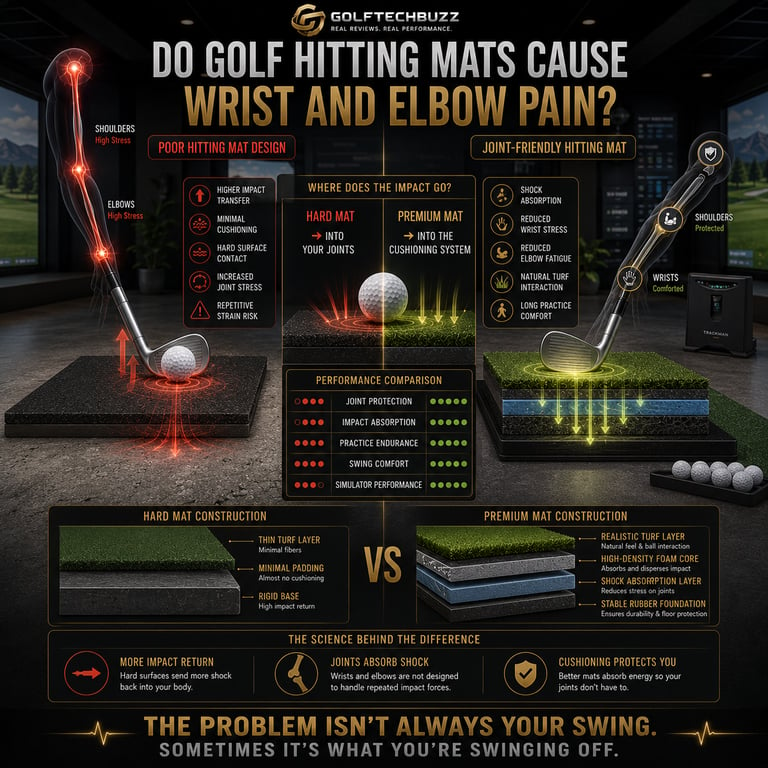
How Golf Hitting Mats Work and Their Role in Practice
Golf hitting mats are your go-to when you can't hit outside. Whether you’re setting up a simulator in the basement or just want something reliable in the garage, these mats provide a synthetic surface to swing on. They usually come with a foam or rubber backing to reduce shock, and the 'grass' surface can be anything from nylon tufts to synthetic turf. The goal is to mimic natural turf while giving you a consistent hitting surface.
But here’s the catch: not every mat is built the same. Some are too hard, transmitting the force of your swing directly into your wrists and elbows. Others might be too thin or worn out, losing the shock-absorbing ability they started with. For someone practicing frequently, that extra jolt every time the club strikes can add up to some serious joint discomfort.
The design, thickness, and construction of the mat all play a role, which is why How Thick Should a Golf Hitting Mat Be? is such an important question for serious golfers.
Understanding Wrist and Elbow Pain in Golf
Wrist and elbow pain in golfers usually comes from overuse, poor technique, or equipment that doesn’t play nice with your body. The wrist often takes a beating from the repetitive impact and torque during swings, especially if the clubface hits the mat or hard turf. The elbow—in particular, the tendons on the outer side (think “tennis elbow”) or the inner side—can react badly to continuous strain from swings that aren’t smooth or controlled.
When you add a golf hitting mat into the mix, you’re changing the conditions your body is used to. A hard mat surface doesn’t flex the way grass or natural turf does, which can place more stress on these joints.
Can Golf Hitting Mats Cause Joint Pain?
To answer this straight up: yeah, they can contribute if you’re not careful. But it’s rarely just the mat alone causing trouble. It’s usually a perfect storm of factors: a hard mat, poor swing mechanics, and no routine to manage overuse.
I’ve seen guys swing hard on those dense nylon mats that might as well be concrete slabs—then wonder why they’re waking up with elbow pain. The mat’s unforgiving surface boosts the shock that reaches your joints. Over time, that shock doesn’t just cause temporary soreness; it can lead to inflammation or even injuries that bench you for weeks.
Many golfers eventually begin comparing softer hitting-strip systems after experiencing discomfort. If you're considering alternatives, Golf Simulator Hitting Mat vs Hitting Strip explores the differences.
Factors That Contribute to Discomfort: Mat Material, Swing Mechanics, and More
The material and thickness of your golf hitting mat play a big role. Most mats are made from some mix of nylon, synthetic turf, or rubber, anchored to a foam or rubber cushioning layer underneath. Here’s what you need to know:
Hard mats (think dense rubber or thin nylon mats with minimal padding) transmit more vibration and force back into your arms.
Softer mats with thicker foam padding absorb more impact, lowering strain on your wrists and elbows.
Worn-out mats lose their cushion, effectively turning your practice space into a joint disaster zone.
Mat placement matters: if it shifts during practice, you risk awkward swings or hitting off-balance.
Swing mechanics are just as critical. If your technique isn’t spot-on—say you’re over-rotating your wrists or have an inconsistent swing path—the stress on your joints increases exponentially, especially when hitting off a hard surface.
Also, over-practicing on mats without proper rest or warm-up increases the odds of discomfort. Remember, your joints need care.
How to Choose the Best Golf Hitting Mat for Joint Health
If you’re battling wrist or elbow pain and suspect your hitting mat might be the culprit, it’s time for an upgrade. Here’s how to pick a mat that won’t punish your joints:
Look for mats with ample foam or rubber padding. Thick underlayers absorb shock much better than thin mats.
Choose synthetic turf that mimics natural grass feel but offers a bit of “give” on impact.
Avoid super-dense nylon mats, especially if you already have joint concerns.
Consider mats designed specifically for reducing joint impact—they usually advertise extra cushioning or shock absorption.
Assess durability too: mats that degrade fast lose cushioning and start beating up your joints.
Match your mat to your playing level. Beginners might want more shock absorption, while advanced players may prefer turf that's closer to real grass but still forgiving.
If you’re setting up a simulator, ensure the mat anchors well. Movement during your swing can force you into awkward positions.
If you're currently shopping for an upgrade, our Best Golf Simulator Hitting Mats guide compares several options designed with comfort and durability in mind.
Tips for Preventing Wrist and Elbow Pain During Practice
While the mat choice is crucial, don’t forget these practical steps that make all the difference:
Warm up properly before you swing. Stretch your wrists, forearms, and elbows and do some light swings.
Don’t overdo it. Quality practice beats quantity when it comes to protecting joints.
Pay attention to pain signals. If you feel sharp or persistent pain, stop and rest.
Check your technique regularly. Working with a pro or filming your swing can help you catch and correct issues before they turn into injuries.
Maintain your equipment. Make sure your clubs are fitted and grips are in good shape—they influence how your joints absorb impact.
Rotate between different mats or practice surfaces when possible to avoid repetitive strain injuries.
Golfers building permanent simulator rooms may also benefit from reading How to Build a DIY Golf Simulator Floor, since flooring can impact overall comfort.
Common Mistakes
Assuming all golf hitting mats are the same and buying whatever’s cheapest.
Swinging hard with improper form repeatedly on a hard mat.
Skipping warm-up routines before practice.
Using thin, worn-out mats that no longer cushion effectively.
Ignoring pain and pushing through discomfort without rest or advice.
When to Seek Professional Guidance
If you’re still getting wrist or elbow pain after switching mats and adjusting your routine, it’s time to call in the experts. A golf coach can help tweak your swing mechanics to reduce stress on your joints. Likewise, a physical therapist or sports medicine specialist can assess any underlying issues and recommend exercises or treatments.
Don’t let nagging pain become a chronic problem that sidelines your game long-term.
FAQs About Golf Hitting Mats and Joint Pain
Can a golf hitting mat cause wrist or elbow pain?
Yes, especially if the mat is hard and lacks sufficient cushioning. The increased impact force can stress joints, particularly when combined with poor swing mechanics or overuse.
What type of hitting mat is best for preventing joint pain?
Look for mats with thicker foam or rubber padding and synthetic turf that offers some give underfoot. Mats designed specifically to reduce joint impact are your best bet.
How does the hardness of a golf mat affect swing impact?
Hard mats transmit more shock through the club into your wrists and elbows, potentially causing discomfort or injury over time, whereas softer mats absorb more vibration.
Are there specific mats designed to reduce golf swing discomfort?
Yes. Some brands market hitting mats with enhanced shock absorption features targeting golfers with joint sensitivity or prior injuries.
How can I modify my practice routine to avoid joint pain from hitting mats?
Warm up properly, avoid excessive repetitive swings, rotate practice surfaces, and maintain good swing mechanics to reduce joint stress.
Does practicing on mats indoors increase injury risk compared to outdoor ranges?
Potentially, because mats usually offer a firmer surface than natural turf, which can increase joint impact, especially if mats are hard or poorly maintained.
What role does swing technique play in preventing pain when using hitting mats?
A lot. Proper swing mechanics distribute forces more evenly and reduce strain, greatly lowering the chance of wrist and elbow pain.
How often should golf hitting mats be replaced to maintain safety for joints?
It depends on usage and quality, but worn or thinned-out mats that lose cushioning should be replaced promptly to avoid increased joint stress.
Practical Conclusion
If you’re battling wrist or elbow pain, don’t blame the golf gods just yet—look to your hitting mat and practice habits first. Hard, dense mats combined with sloppy swing mechanics are a recipe for joint misery. But here’s the good news: swapping out that old, beat-up mat for one with real padding, dialing in your technique, and warming up properly go a long way toward swinging pain-free.
I’ve been there and fixed it more times than I can count. So, if you want to keep your joints happy between seasons and get the most out of your indoor practice, invest in a quality mat designed for joint health, pay attention to your body, and swing smart.
Before you buy, it's worth comparing Best Golf Simulator Hitting Mats, Best Golf Simulator Hitting Strips, and Do Golf Hitting Strips Reduce Joint Pain? to see which solution fits your practice style best.
Your wrists and elbows will thank you — and so will your scores.
© 2026 GolfTechBuzz. All rights reserved.
Golf Tech Buzz
Performance Through Data
Practical guides, real-world setups, and unbiased comparisons for golfers building smarter practice environments.
General Inquiries: