

How Thick Should a Golf Hitting Mat Be?
Discover the ideal golf hitting mat thickness for durability, comfort, and joint protection to elevate your indoor golf practice effectively.
SIMULATOR MATS
Golf Tech Buzz Editorial Team - Led by AJ “Buzz” Eichman
6/12/20267 min read
How Thick Should a Golf Hitting Mat Be?
If you’re diving into the world of indoor golf practice or setting up a simulator, one question always pops up: how thick should your golf hitting mat be? This is no small detail—get it wrong, and you’re stuck with a mat that either bites the dust too fast or doesn’t protect your joints and gear the way it should.
Here’s the deal: golf hitting mats come in a range of thicknesses, usually between a quarter-inch all the way up to 1.5 inches. But thickness isn’t just about how the mat feels under your feet or club; it’s about durability, shock absorption, and making every swing feel close to real turf. You want a mat that handles your swing’s power without turning into a soggy mess after a few rounds.
This guide breaks down what you need to know about golf hitting mat thickness—from understanding what different thickness levels offer, to tips on picking the right one based on how and where you practice.
Before choosing a mat, it's worth understanding how thickness fits into the bigger picture of Golf Simulators and the complete Golf Simulator Hitting Mat Guide.
Quick Verdict
Most golfers find the sweet spot between 0.5 to 1.5 inches thick mats for the right combo of comfort and durability.
Thicker mats (around 1 inch or more) protect your joints better and mimic real turf feel but take up more space and weigh more.
Thinner mats (0.25 to 0.5 inches) are lightweight, portable, and budget-friendly—but wear out faster and offer less cushioning.
Multi-layer hitting mats with a dense base and realistic turf fibers outperform single-layer mats in durability and comfort.
Why Thickness Matters in Golf Hitting Mats
Think of your hitting mat as both the stage and the shock absorber for your swing. When your club smacks the mat, that impact transmits up your arms and shoulders—and if your mat is too thin or made of cheap foam, it’s like hitting off cold concrete. Not fun, and not great for your joints.
Thickness directly relates to a mat’s ability to absorb shock and bounce back after impact. Thicker mats with high-density foam padding offer that cushion, preventing the “club ding” sound and protecting your wrists and elbows. This matters especially if you swing hard or practice daily.
On the flip side, thicker mats tend to be heavier and less portable, so if you’re someone who hits on the go, thickness becomes a balancing act. Also, thickness alone doesn’t guarantee durability; the density of the materials and the layering matter a lot too.
Golfers concerned about long-term comfort should also read Do Golf Hitting Mats Cause Wrist and Elbow Pain?
Common Thickness Ranges and What They Mean
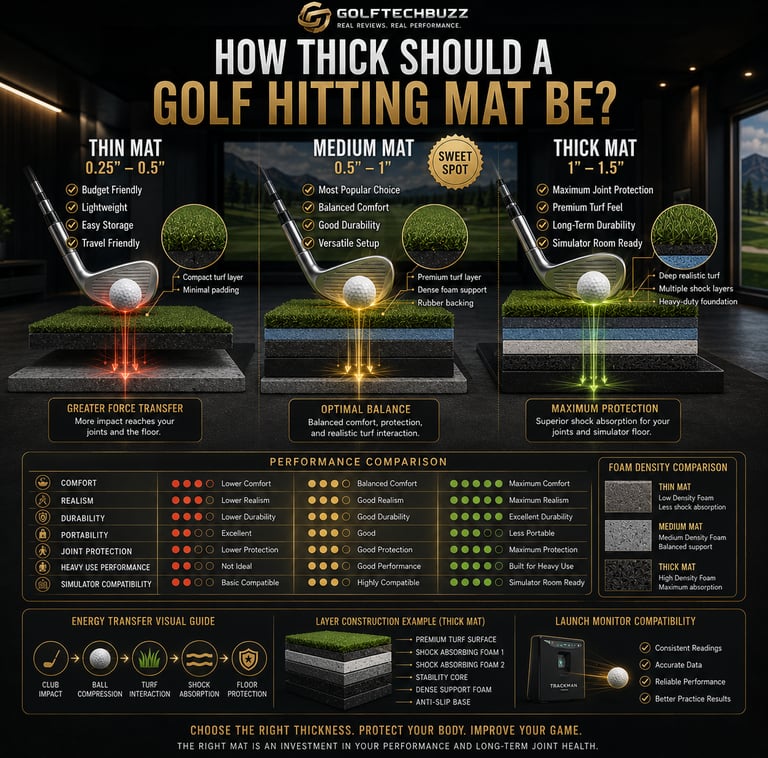
Typically, golf mats come in three size buckets:
Thin mats: 0.25 to 0.5 inches
These are usually budget picks or designed for easy transport and quick setups. If you’re a beginner or casually chipping in the backyard, these work fine. Just don’t expect them to last a season of intense practice or heavy hitters swiping through.Medium thickness mats: 0.5 to 1 inch
This is where most solid hitting mats live. Moderate thickness supports decent joint protection and durability while staying manageable in size. You get a satisfying feel without lugging around too much weight.Thick mats: 1 to 1.5 inches
This is the sweet spot for sim setups or garage bays. These thicker mats combine a realistic turf feel with superior shock absorption. They’re ideal if you’re swinging hard and want to protect your body and your flooring underneath.
Many of the products in our Best Golf Simulator Hitting Mats guide fall into this thickness range because it balances comfort and durability well.
Benefits of Different Thickness Levels
Thin mats save money and space—great if you hit a few balls a week or travel with your setup. But the trade-off? Expect quicker wear and less protection. You might see your mat fibers flatten faster or the foam compress and lose its bounce.
Medium mats strike a nice balance. They’re durable enough for regular use, provide a decent turf feel, and offer some joint protection without taking over your garage.
Thicker mats feel closest to the real deal on the course. The few extra pounds and space they consume pay off with their longevity and how natural your shots feel. If you’re serious about home golf simulators or running winter leagues like I do, these babies are no-brainers.
Multi-Layer Hitting Mats Explained
Thickness matters, but layers matter even more. Many top-tier mats stack a dense shock pad underneath and a top layer of synthetic turf designed to mimic grass blades. This layered construction distributes impact forces better than a single slab of foam.
Think of it like a cigar with a firm filler but a smooth wrapper—each layer has a job. The bottom layer cushions the impact, reducing strain on joints and preventing mat bottom wear, while the top grass layer gives you that crisp, realistic feel and keeps your clubs happy.
In fact, a thinner mat with quality layers can outperform a thicker single-layer mat that’s all foam and no turf finesse.
How to Choose the Right Thickness for Your Needs
Here’s where being your own knowledgeable friend comes in: ask yourself how you’ll use the mat.
Are you a weekend warrior who splits practice between indoors and outdoors? A medium thickness mat (around 0.5 to 1 inch) probably hits the right note for portability and longevity.
Heavy hitters or daily grinders with garage simulators should go thicker (1 inch plus). Your joints and floor will thank you later.
Beginners just trying to keep their swing honest? Thin mats work fine, saving you money and bulk.
Also consider your swing speed and strength. Faster swingers generate more force, so thicker mats provide essential shock absorption. If you smash drives like you’re trying to punch out a sand trap, a thin mat won’t stand up long.
Finally, think about space and weight. Thick mats eat up floor real estate and are heavier to move. If you need to pack up daily or don’t have much room, that limits your thickness choices.
If you're installing over a garage slab or basement floor, check out Can You Put a Golf Hitting Mat Directly on Concrete?
Common Mistakes When Buying a Golf Hitting Mat
I’ve seen guys try this and get burned all too often:
Choosing mats based on thickness alone: If the turf layer is cheap or the foam density low, a thick mat won’t necessarily last longer.
Buying mats that are too thin: Sure, they’re tempting on price and portability, but they quickly flatten and require replacement.
Assuming thicker is better in every case: Your space and usage matter. Don’t clutter your setup with unnecessary bulk.
Ignoring the backing material: A rubber backing adds grip and prevents the mat from sliding, especially indoors.
Not considering your swing style: Heavy hitters need more cushioning; light swingers can save with thinner mats.
Golfers comparing complete mats against dedicated impact zones may also want to review Golf Simulator Hitting Mat vs Hitting Strip before buying.
Maintaining and Extending Mat Life
No matter the thickness, a good mat needs care. After all, it’s your launchpad to better shots.
Avoid hitting off hard surfaces without a mat—this kills turf fibers fast.
Rotate your hitting spots to prevent local wear.
Clean debris and dirt regularly to keep turf fibers fresh.
Store your mat flat and dry if you’re not using it for a while.
Use a maintenance spray designed for synthetic turf to preserve that fresh-cut look.
If durability is a major concern, How Long Do Golf Simulator Hitting Mats Last? breaks down what affects lifespan the most.
Frequently Asked Questions About Mat Thickness
What is the best thickness for a golf hitting mat?
Most folks settle between 0.5 and 1.5 inches. It balances durability, comfort, and realistic feel. Your skill level and swing force influence the best choice though.
How does mat thickness affect my golf swing practice?
Thicker mats cushion impact better, reducing joint strain and making each swing feel more like real turf. Thinner mats can feel harder and wear out faster, which might mess with your consistency.
Are thicker mats better for joint protection?
Absolutely. The denser and thicker the foam padding, the less shock travels up your arms. Good for those heavy hitters or daily practice warriors.
Can I use a thin hitting mat for heavy hitters?
You can, but expect faster wear and less protection. You'll likely need to replace it sooner and risk joint discomfort.
How do layered hitting mats work compared to single-layer mats?
Layers help absorb shock better and present a realistic surface. A dense foam base cushions impact while multiple turf layers simulate grass feel. Single-layer mats typically just have foam and basic turf, sacrificing realism and durability.
What thickness mat is suitable for indoor vs outdoor use?
Indoor use generally benefits from thicker mats (1 inch plus) to protect floors and joints. Outdoor setups might prioritize weather-resistant materials and portability, sometimes accepting thinner mats.
Does a thicker mat mean better durability?
Not always—it depends on foam density and layer quality. A thinner, high-density multi-layer mat can outlast a thicker, low-quality one.
How do I maintain the lifespan of my golf hitting mat?
Rotate hitting spots, clean turf regularly, avoid hitting off hard surfaces without protection, and store your mat properly when not in use.
Practical Conclusion
When it comes to golf hitting mat thickness, there’s no one-size-fits-all. If I’m being honest, it boils down to how hard you swing, where you practice, and how much space you’ve got. For daily grinders and home sim junkies, thicker mats around an inch or more are the way to go—they save your joints and mimic the course better. For casual weekend warriors, or those chasing portability on a budget, thinner mats do the job but don’t expect them to last forever.
Remember that thickness is just part of the story. Quality of foam, turf, layers, and backing matter just as much. Think of your hitting mat as the foundation of your practice—it deserves an investment that matches your game.
If you're still comparing options, take a look at Best Golf Simulator Hitting Mats, Best Golf Simulator Hitting Strips, and Golf Simulator Hitting Mat vs Hitting Strip before making a final decision.
So, buddy, next time you’re in the market for a hitting mat, factor in thickness wisely. Your swing, joints, and wallet will thank you.
© 2026 GolfTechBuzz. All rights reserved.
Golf Tech Buzz
Performance Through Data
Practical guides, real-world setups, and unbiased comparisons for golfers building smarter practice environments.
General Inquiries: