

Can You Put a Golf Hitting Mat Directly on Concrete?
Explore the pros and cons of placing your golf hitting mat directly on concrete and learn how to protect both mat and floor effectively.
SIMULATOR MATS
Golf Tech Buzz Editorial Team - Led by AJ “Buzz” Eichman
6/12/20267 min read
If you’re like me—a guy who’s tested just about every setup known to man when it comes to indoor golf practice—then the question of putting a golf hitting mat straight on concrete floors has probably crossed your mind. I’ve seen guys try this, and most times it works... but it’s not always pretty or simple. Here’s the deal: putting a golf hitting mat directly on concrete is doable, but there’s a handful of trade-offs and things to watch out for if you want both your mat and your concrete to live long and prosper.
Let’s break down what you really need to know before you just throw down your mat and swing away.
If you're planning an indoor setup, it's worth understanding how flooring fits into the larger world of Golf Simulators and the complete Golf Simulator Hitting Mat Guide before making permanent decisions.
Quick Verdict
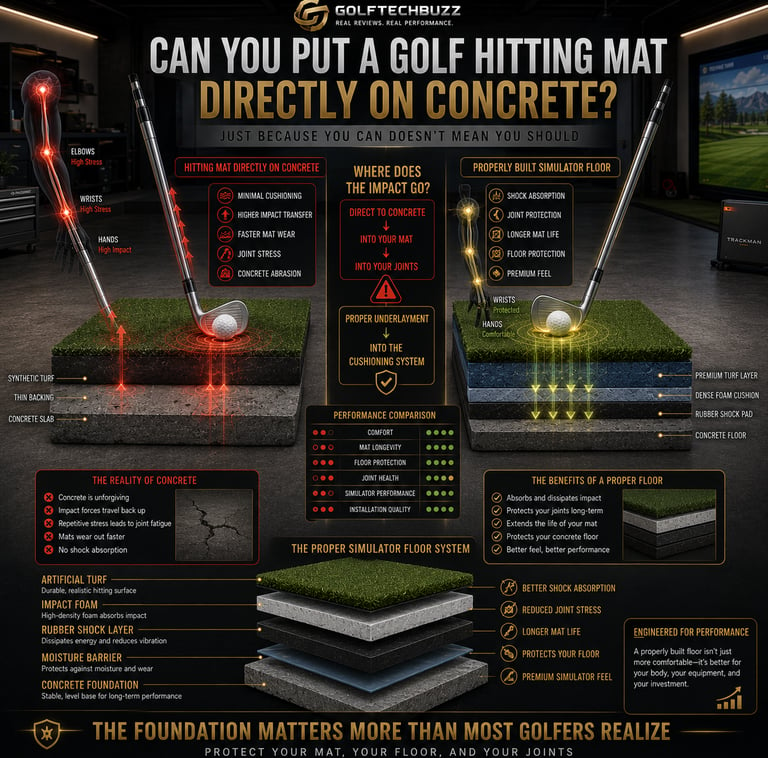
You can put a golf hitting mat directly on concrete, but expect faster wear on the mat and possible surface issues on the concrete over time.
Concrete offers a rock-solid, flat base but zero shock absorption, which means less comfort and more stress on your joints and clubs.
Using a foam pad or rubber underlayer between your hitting mat and the concrete significantly extends mat durability and protects the floor.
Mats specifically designed for hard surfaces with thicker backing are your best bet if you’re determined to hit on concrete.
Why People Choose Concrete for Putting a Golf Hitting Mat
Concrete floors pop up everywhere—garages, basements, commercial spaces, and even some apartments. The appeal is obvious: that flat, stable surface makes setup straightforward and predictable. Unlike carpet or wood that sometimes wrinkles or shifts, concrete stays put like a good caddie.
But here’s the rub: concrete’s also unforgiving. It doesn’t give way to absorb shock or protect your gear. If you’re whacking balls indoors on this hard surface day in and day out, your mat and clubs are going to feel it sooner rather than later. Not to mention the concrete itself can take some hits or scuffs from repeated contact with the mat and your golf clubs.
Benefits and Drawbacks of Using Concrete as a Base
Benefits
Stability: Concrete floors provide an incredibly stable, flat surface which is ideal for consistent practice sessions. No wobbling or uneven terrain to mess with your swing.
Easy Maintenance: Concrete cleans up easily and won’t get damaged by water or dirt as carpet or turf might.
Space Utilization: Many indoor golf setups are in garages or basements with concrete floors, making it a natural choice.
Drawbacks
Lack of Shock Absorption: Concrete offers zero cushioning. This means more impact force transferring to your joints and those expensive sticks in your hand.
Mat Wear: Without some sort of protective layer, the backing on your golf hitting mat can abrade quickly against the hard floor.
Concrete Damage: Over time, the constant pressure and friction can develop surface scratches or even small cracks—especially if your setup is permanent or heavily used.
Moisture Issues: Concrete can trap moisture underneath the mat, potentially leading to mildew or deterioration of your mat’s backing if airflow isn’t managed.
Many golfers don't realize how much impact the flooring underneath the mat has until they begin experiencing discomfort. That's one reason Do Golf Hitting Mats Cause Wrist and Elbow Pain? is such a common question.
How to Protect Your Concrete Floor and Golf Mat
If you’re dead set on laying your hitting mat right on concrete, give yourself and your gear some breathing room with these simple tips:
Protective Underlayers
Foam Padding: Classic and inexpensive. A layer of closed-cell foam under your hitting mat adds crucial shock absorption and protects both surfaces. Just make sure the foam is dense enough to maintain stability.
Rubber Mats: These are tougher and offer great grip, preventing mat slippage. I run these under my simulator mats when I hit in the garage.
Specialized Golf Mat Pads: Several companies now sell pads designed expressly as golf mat underlays for hard surfaces, offering a blend of cushioning and durability.
Surface Prep
Clean the Concrete: Remove any debris, dust, or gravel. Small bits can punch holes in your mat’s backing if left unchecked.
Smooth It Out: Uneven floors cause hotspots where your mat wears faster. If you spot rough patches or cracks, try to level or fill them.
Ventilation and Moisture Control
Allow some airflow under the mat to keep moisture from building up. You can prop the mat slightly or schedule regular breaks where you lift it up and air it out.
Consider a moisture barrier if your concrete tends to get damp.
Choosing the Right Golf Mat for Concrete Floors
Not all golf mats were born equal. If you’re hitting on concrete, picking the right mat can save you a ton of headaches.
What to look for:
Thick, Durable Backing: Mats with rubber or dense foam bases designed for hard surface use hold up better and prevent slipping.
Synthetic Turf Quality: Fibers that feel close to real grass but aren’t too delicate help maintain realism without shredding quickly.
Shock Absorption Built-In: Some mats incorporate layers to protect from impact without requiring an extra pad.
Portability: If you’re moving your mat around a lot in a garage or commercial space, lighter mats with grip bottoms work best.
Avoid cheap outdoor mats or thin models meant just for grass. They’ll wear out faster and won’t protect your floor well.
If you're currently shopping, our Best Golf Simulator Hitting Mats guide highlights several options that work well on hard surfaces.
Tips for Setting Up a Hitting Mat Indoors on Concrete
Pick the flattest, cleanest spot you can find.
Always add a padding layer unless your mat specifically says it’s fine directly on concrete.
Secure the mat edges if you use it in a high-traffic area to avoid tripping hazards.
Consider a standing mat alongside your hitting mat if you’re practicing a ton—it’s easier on your joints.
Regularly check the mat and floor for signs of wear and moisture buildup.
Keep your clubs clean since grit from concrete can cause scratches.
Golfers building dedicated simulator rooms often go one step further and create complete flooring systems. If that's your plan, check out How to Build a DIY Golf Simulator Floor.
Maintaining and Extending the Life of Your Hitting Mat
Last thing—if you want your mat to outlast your golf seasons, put a little elbow grease into maintenance. Sweep and vacuum the surface regularly, air it out periodically, and make sure you’re not trapping moisture underneath. Rotate your setup occasionally to avoid uneven wear and, if possible, invest in a mat and pad combo rated for hard surfaces.
If you're curious about expected lifespan, How Long Do Golf Simulator Hitting Mats Last? covers what impacts durability the most.
If you get all your ducks in a row, your hitting mat on concrete will serve you well whether you’re fine-tuning your driver in the garage or perfecting your irons in the basement simulator.
Common Mistakes When Using Mats on Hard Surfaces
Skipping a protective underlayer. This is the number one culprit behind premature mat failure.
Using outdoor or thin mats indoors on concrete floors without extra padding.
Ignoring surface prep. Grit or rough concrete will eat into your mat backing fast.
Letting moisture accumulate under the mat—leading to mold and degradation.
Not inspecting the concrete and mat regularly for cracks or wear spots.
Forgetting shock absorption, increasing stress on your wrists, elbows, and shoulders.
Setting up on uneven or sloping concrete surfaces causing balance issues during your swing.
Another common mistake is focusing only on the mat itself rather than the complete hitting surface system. Golf Simulator Hitting Mat vs Hitting Strip compares the two most popular approaches.
Frequently Asked Questions About Golf Mats on Concrete
Can I put a golf hitting mat directly on concrete without any protection?
You can, but it’s not ideal. Mat durability will suffer, and the concrete may get damaged over time. Use a protective foam or rubber layer to extend life and protect both surfaces.
What is the best underlayer to use under a golf hitting mat on concrete?
Dense closed-cell foam or rubber matting designed for sports or gym use works best. There are also golf-specific protection pads that combine cushioning with grip.
Will hitting on concrete damage my golf clubs or the mat?
Concrete has zero forgiveness for impact. Without cushioning, your mat will wear faster, and your joints and clubs can take extra abuse, especially on mishits where the club impacts the mat’s hard backing.
How durable are golf hitting mats when used on hard surfaces like concrete?
It depends on the mat quality and whether you use padding. Mats designed for hard surfaces with thick backing tend to hold up well, but cheap thin mats wear down quickly.
How can I protect my concrete floor while using a golf mat indoors?
Add a protective underlayer, clean the floor regularly, avoid moisture buildup, and check for rough patches or damage often to prevent scratches and cracks.
Are there specific mats designed for concrete use versus grass or turf?
Yes. Mats aimed at indoor or garage use often have reinforced backing and shock-absorbing materials that make them ideal for concrete.
Does placing a mat on concrete affect ball bounce or shot feel?
Slightly, yes. Concrete is a much harder base, which may influence how the hitting mat feels underfoot and how the ball reacts. Mats with proper turf fibers and cushioning help mimic outdoor conditions better.
How often should I inspect or replace a hitting mat used on concrete?
Check your mat every few months for signs of wear or moisture damage. Replace sooner if you see synthetic turf thinning or backing deterioration affecting practice quality.
Final Thoughts
If I’m being honest, concrete isn’t the most forgiving place to put a golf hitting mat, but it’s definitely workable with the right precautions. The biggest rookie mistake? Skipping the underlayer. You might save a few bucks upfront, but you’ll pay for it in rapid mat wear and potential concrete damage.
So, do yourself a favor: pick a mat designed for hard floors, add a layer of cushioning, prep your surface, and keep an eye on moisture. Your mat will thank you, your concrete will thank you, and your swing will definitely steady up.
If you're still evaluating your setup, spend a few minutes reviewing Best Golf Simulator Hitting Mats, How Thick Should a Golf Hitting Mat Be?, and Golf Simulator Hitting Mat vs Hitting Strip before investing in new flooring or turf.
Now light up a cigar (or a golf pun), grab your clubs, and hit those shots like a pro. Just maybe don’t do it barefoot on bare concrete. Trust me on this one.
© 2026 GolfTechBuzz. All rights reserved.
Golf Tech Buzz
Performance Through Data
Practical guides, real-world setups, and unbiased comparisons for golfers building smarter practice environments.
General Inquiries: