
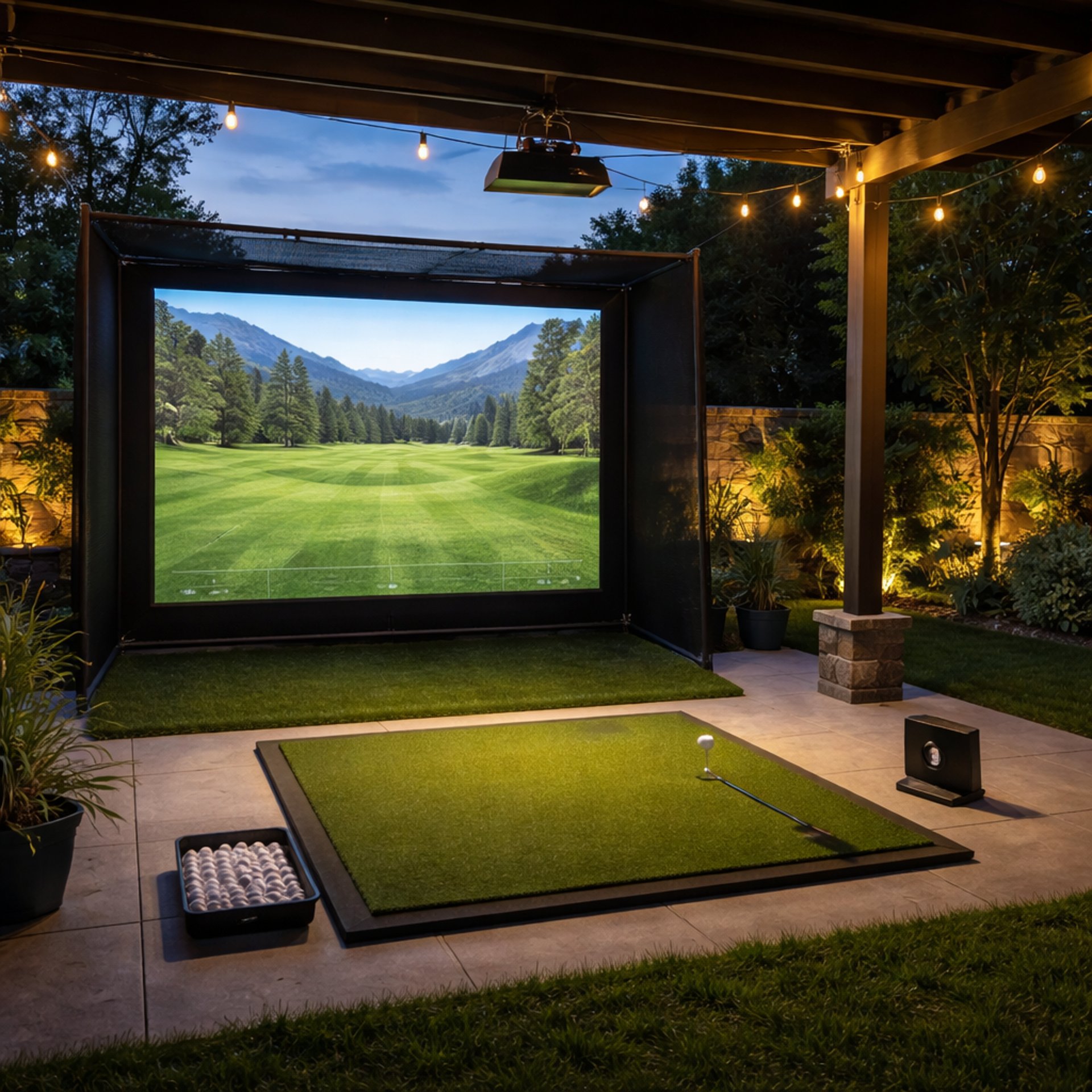
Golf Simulator
Hitting Mat Guide
Everything You Need to Know Before Buying
Building a simulator is about more than launch monitors, projectors, and software. The surface you stand on and hit from directly affects comfort, durability, shot feedback, and the overall quality of your practice sessions.
For a complete simulator overview, start with Golf Simulators before building the hitting area.
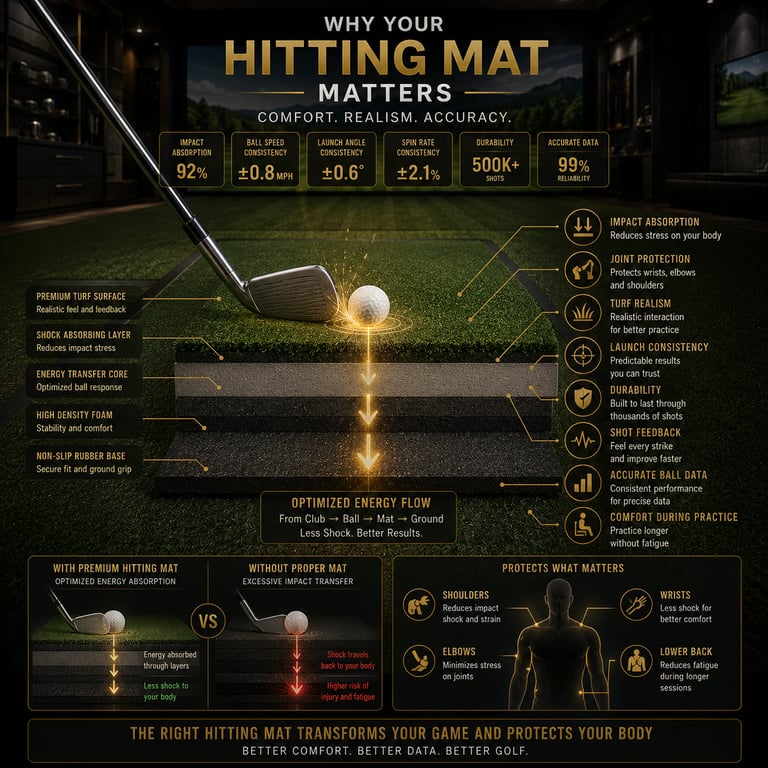
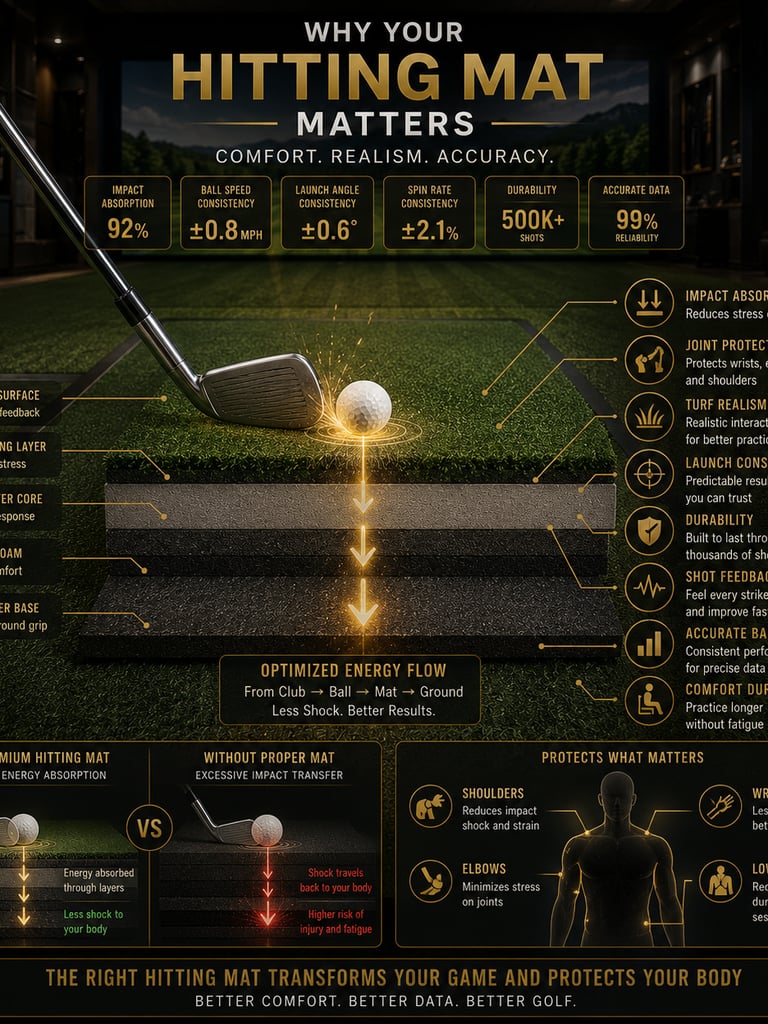
Why Your Golf Mat Matters More Than You Think
The hitting surface is the only part of the simulator that physically interacts with your golf swing.
Every shot transfers energy through:
Your club
The ball
The hitting surface
Your hands, wrists, elbows, and shoulders
That means mat design directly impacts:
Practice comfort
Turf realism
Launch monitor consistency
Long-term durability
Injury prevention
Many golfers don't realize this until after they've spent weeks practicing on a poor-quality mat.
Understanding What Is a Golf Simulator Hitting Mat? is often the first step toward avoiding those mistakes.

The Two Main Types of Simulator Hitting Surfaces
Most golfers will eventually choose between:
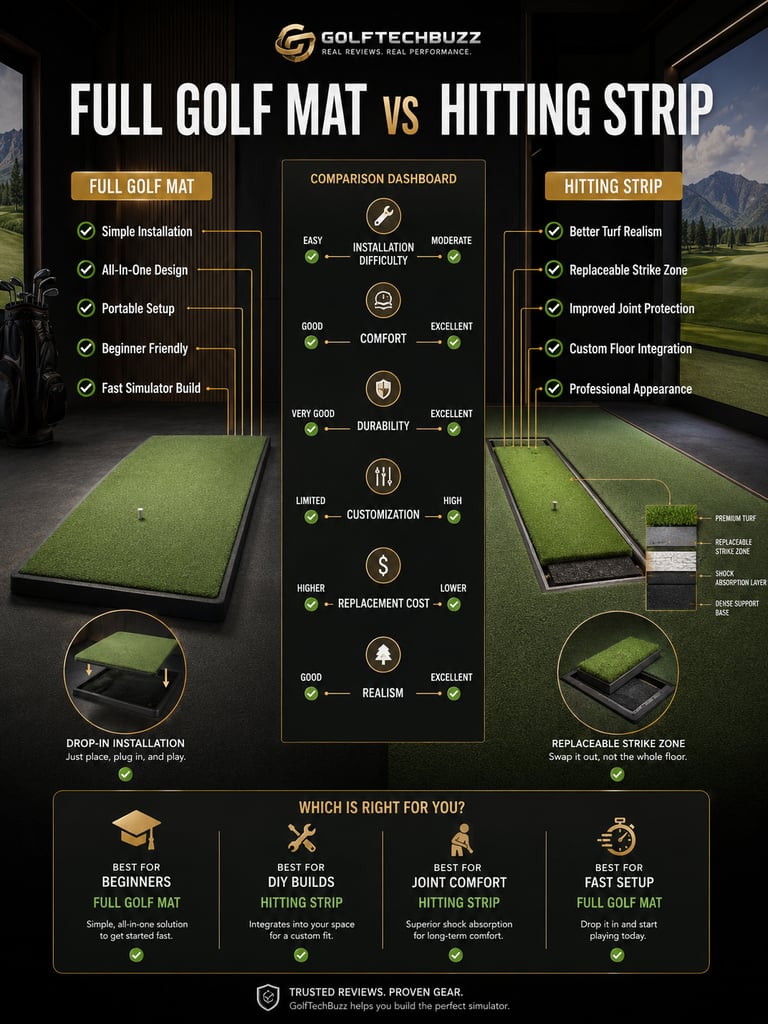
Full Golf Mats
A complete hitting surface that includes both the stance area and hitting zone.
Advantages:
Simple installation
All-in-one design
Portable
Beginner friendly
Potential drawbacks:
Entire mat may need replacement when worn
Less customization
Some models feel firmer
If you're considering a complete solution, see our guide to the Best Golf Simulator Hitting Mats.
Hitting Strips
A dedicated hitting zone installed into custom flooring or simulator turf systems.
Advantages:
Better turf realism
Easier replacement
Improved joint protection
Custom installation flexibility
Potential drawbacks:
More complicated installation
Requires planning
Often part of larger flooring systems
If you're considering a dedicated impact zone, explore the Best Golf Simulator Hitting Strips guide.
Golf Simulator Hitting Mat vs Hitting Strip
One of the biggest decisions simulator owners face is whether to choose a complete mat or a dedicated hitting strip.
For casual golfers, full mats often provide the simplest solution.
For dedicated simulator owners, hitting strips frequently provide better realism, comfort, and long-term value.
Our full Golf Simulator Hitting Mat vs Hitting Strip comparison breaks down the advantages and disadvantages of each option.
What Actually Matters in a Golf Simulator Mat
Comfort
A mat should absorb impact without creating excessive resistance. Golfers who practice frequently often discover that comfort becomes more important than almost any other feature.
Turf Interaction
The club should move naturally through impact. The best mats provide realistic feedback without excessive bounce.
Durability
Simulator mats experience thousands of swings every year. Construction quality becomes extremely important over time.
Thickness
Thickness affects:
Comfort
Stability
Shock absorption
Installation requirements
For a deeper breakdown, see How Thick Should a Golf Hitting Mat Be?
Launch Monitor Performance
The mat should support consistent strike quality and reliable launch monitor readings. Better turf interaction generally creates more consistent simulator results.
Why Joint Protection Matters
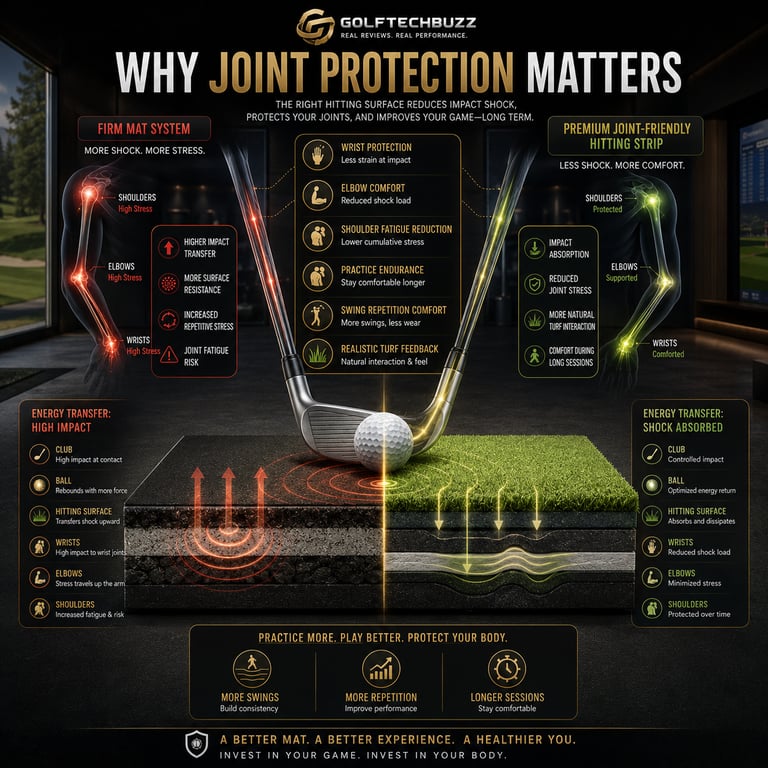
Many golfers assume simulator practice is easier on the body than range practice.
Sometimes the opposite is true.
Indoor golfers often hit:
More balls
More frequently
On the same surface every session
That repetitive impact can create:
Wrist discomfort
Elbow pain
Shoulder fatigue
This is one reason many golfers eventually move toward softer turf systems and hitting strips.
For more information, see:

Understanding
Hitting Strips
As simulator technology has improved, hitting strips have become increasingly popular.
Unlike full mats, hitting strips focus only on the impact area.
Benefits include:
Better turf realism
Easier replacement
Improved comfort
Lower long-term replacement costs
If you're new to the concept, start with:
Installing a Golf
Simulator Mat
Many golfers underestimate how important installation can be.
Common installation mistakes include:
Uneven flooring
Poor support underneath
Improper height matching
Direct placement on hard concrete
These mistakes can affect both comfort and performance.
Before installing a simulator surface, review:
How Long Should a
Golf Mat Last?
Lifespan depends on:
Turf quality
Swing speed
Practice volume
Maintenance
Installation method
A premium simulator mat can last for years.
Budget mats often wear significantly faster, especially in the hitting area.
For a detailed breakdown, read How Long Do Golf Hitting Mats Last?
Choosing the Right
Hitting Surface
Choose a Full Golf Mat If:
You want easy installation
You're building your first simulator
You need portability
You want an all-in-one solution
Choose a Hitting Strip If:
You practice frequently
You want maximum realism
Joint protection matters
You're building a permanent simulator room
You want replaceable hitting areas

Common Mistakes to Avoid
Buying Based on Price Alone
Cheap mats often become expensive when replacement costs are considered.
Ignoring Comfort
Joint pain can quickly reduce how often you practice.
Choosing the Wrong Thickness
The wrong thickness can affect both comfort and installation.
Not Planning for Replacement
Wear eventually happens.
Some systems make replacement significantly easier than others.
Overlooking Flooring Design
The surface underneath your mat is just as important as the mat itself.
Frequently asked questions
What is a golf simulator hitting mat?
A golf simulator hitting mat is a specialized turf surface designed to replicate the feel of hitting from natural grass while protecting both the golfer and the flooring underneath. Unlike basic practice mats, simulator mats are built to withstand thousands of swings while providing consistent turf interaction for launch monitors and simulator software. The best models balance durability, comfort, and realistic feedback so golfers can practice year-round without sacrificing performance.
Are golf simulator hitting mats worth the money?
For most golfers, yes. A quality hitting mat can dramatically improve the simulator experience by providing better comfort, more realistic turf interaction, and longer-lasting durability. Cheap mats often wear quickly, create excessive club bounce, and can contribute to wrist or elbow discomfort. While premium mats cost more upfront, they often provide better long-term value because they last longer and create a more enjoyable practice environment.
What is the difference between a golf hitting mat and a hitting strip?
A golf hitting mat is a complete practice surface that includes both the stance area and hitting zone. A hitting strip is a dedicated impact area that is usually installed into custom flooring or simulator turf systems. Full mats are easier to set up and more portable, while hitting strips typically offer better turf realism, improved joint protection, and lower long-term replacement costs because only the hitting section needs to be replaced.
How thick should a golf simulator hitting mat be?
Most golf simulator mats range from 1 inch to 2.5 inches thick. Thicker mats generally provide better shock absorption and a more comfortable hitting experience, especially for golfers who practice frequently. However, thickness alone does not determine quality. The foam system, turf construction, and overall design all contribute to how the mat performs. Choosing the correct thickness also depends on your flooring setup and whether you need the mat to sit flush with surrounding turf.
Do golf simulator mats cause wrist and elbow pain?
Some mats can. Firmer mats with limited shock absorption may transfer impact directly into the hands, wrists, elbows, and shoulders, especially during fat shots. Golfers who practice frequently are more likely to notice this issue over time. Premium simulator mats and hitting strips are often designed with softer foam systems that absorb impact and reduce stress on the body, making extended practice sessions more comfortable.
Can you put a golf simulator mat directly on concrete?
Yes, but it is not always recommended. While many mats can be placed directly on concrete, the hard surface underneath can reduce comfort and increase impact stress during practice. Many simulator owners add foam tiles, underlayment, or custom flooring systems beneath their mats to improve shock absorption and create a more comfortable hitting environment. Proper support can also help extend the lifespan of the mat.
How long do golf simulator hitting mats last?
The lifespan of a golf mat depends on the quality of the turf, how often it is used, swing speed, and maintenance. Budget mats may begin showing wear after a year of heavy practice, while premium simulator mats can last several years. Mats with replaceable hitting sections often provide the best long-term value because golfers can replace the wear area without purchasing an entirely new mat.
Should I choose a golf simulator hitting mat or a hitting strip?
The answer depends on your goals. A full hitting mat is usually the best option for beginners, garage simulators, and golfers who want a simple all-in-one solution. A hitting strip is often the better choice for serious simulator owners who prioritize realism, comfort, and long-term flexibility. Many golfers start with a full mat and later upgrade to a hitting strip once they build a dedicated simulator room and better understand their practice needs.
Final Thoughts
A golf simulator hitting mat is much more than a place to stand.
It influences comfort, realism, durability, launch monitor performance, and overall simulator enjoyment.
The best choice depends on how often you practice, the type of simulator you're building, and whether simplicity or customization is your priority.
For golfers seeking a simple all-in-one solution, quality simulator mats remain the easiest option.
For golfers pursuing maximum realism and long-term flexibility, hitting strips continue to gain popularity.
The most successful simulator builds start by understanding both options before making a purchase.
© 2026 GolfTechBuzz. All rights reserved.
Golf Tech Buzz
Performance Through Data
Practical guides, real-world setups, and unbiased comparisons for golfers building smarter practice environments.
General Inquiries: