

Why Are Golfers Switching to Hitting Strips?
Discover why hitting strips are revolutionizing indoor golf practice with realistic turf feel, improved swing consistency, and durability for all skill levels.
SIMULATOR MATS
Golf Tech Buzz Editorial Team - Led by AJ “Buzz” Eichman
6/12/20266 min read
If you’ve been around the golf practice scene lately or have toyed with setting up a home simulator, you’ve probably noticed hitting strips popping up more and more. They’re not some geeky gadget; these slim, turf-like mats are rapidly becoming the go-to for sharp golfers looking to tighten their swing and ball strike without killing their garage floor—or their budget. Here’s the deal: hitting strips bring a fresh, practical edge to golf practice that traditional mats just can’t match.
If you're considering making the switch, it helps to understand how hitting strips fit into the larger world of Golf Simulators and the complete Golf Simulator Hitting Mat Guide.
Quick Verdict
Hitting strips deliver superior feedback on swing consistency and ball contact.
They’re built tough, lasting much longer than cheap mats, indoors or out.
Perfect for tight spaces and indoor practice setups like home simulators.
Great for golfers of all skill levels aiming to improve swing mechanics and ball striking.
What Are Golf Hitting Strips and How Do They Work?
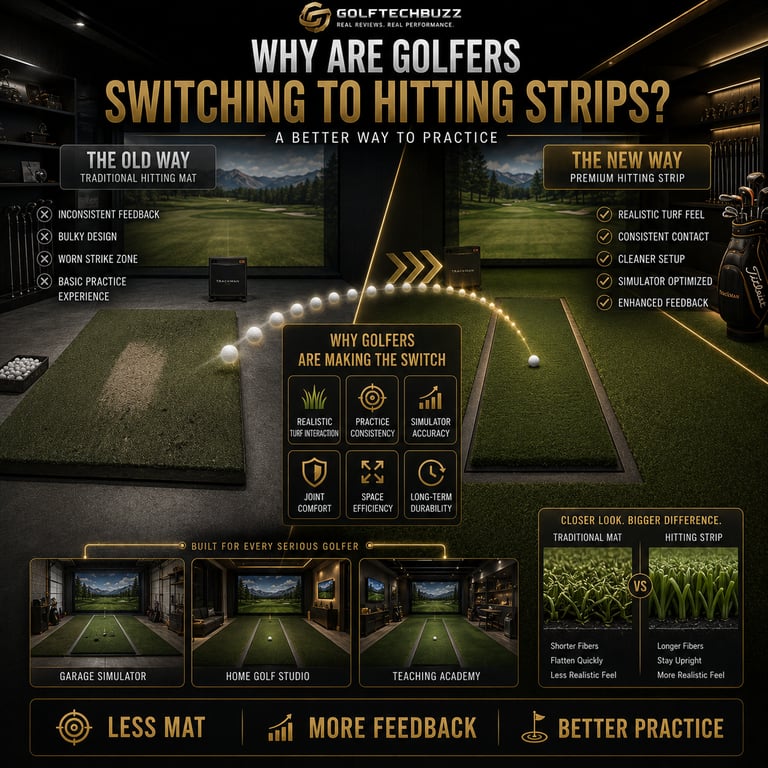
Think of hitting strips as the golf world’s slim, mean practice machine. They’re narrow, durable strips of synthetic turf designed to mimic fairway conditions. Unlike traditional thick mats that can feel squishy and inconsistent, hitting strips give you a firmer, more realistic surface to hit off. The idea is simple: you place your ball on the strip and work on striking it cleanly—something that’s way easier said than done.
What makes them so effective is how they train you to make better contact with the ball. Because the turf fiber height and density are carefully calibrated, it gives you immediate feedback. Hit thin or fat? You’ll feel it. Hit it flush? You’ll know that, too. Over time, this forces your muscle memory to dial in precision, improving swing consistency and ball striking reliability.
If you're unfamiliar with the concept, start with What Is a Golf Hitting Strip? for a complete breakdown.
Key Benefits of Using Hitting Strips for Golf Practice
Improved Swing Consistency
You can swing wildly and still get by on your weekend rounds, but if you want to lower your handicap, consistent ball contact is non-negotiable. Hitting strips demand it. They don’t mask mistakes like some traditional mats, so you learn to groove a swing that strikes the ball squarely, over and over.
Indoor Practice Friendly
Winter leagues aren’t just about showing off your swing; they keep your game in shape when the weather’s garbage. Traditional mats are bulky, take up space, and sometimes screw with launch monitor data. Hitting strips, on the other hand, are slim and portable, making them ideal for garages, basements, or any confined indoor area. Plus, many have moisture-resistant backing, so you can even practice outside without worrying about soggy turf.
Durability and Realistic Feel
Cheap mats shred fast. Many golfers I know cycle through them like socks. Hitting strips are made from layered synthetic turf materials designed to hold up. Good ones mimic a short “fairway cut” feel with controlled fiber height, so you’re not swinging into a sponge or rock-hard plastic.
Suit All Levels
Whether you’re grinding away at single-digit status or a weekend hacker looking to improve, you’ll find hitting strips dial in your ball striking skills. Because the surface isn’t forgiving, they help elevate your game naturally.
Less Space, More Practice
If space is tight, and your practice bay is basically your garage corner, hitting strips fit the bill. They’re easier to roll up or stow away than full-sized mats, making them perfect for quick sessions.
Many golfers also discover that hitting strips are easier on the body, which is why Do Golf Hitting Strips Reduce Joint Pain? has become such a popular question.
Indoor vs Outdoor Use: Setting Up Your Hitting Strip
If you’re thinking hitting strips only fit into high-tech indoor setups, that’s not quite fair. You can, and many do, use them outdoors at driving ranges, practice areas, or even when waiting for tee times.
Indoors, the thin profile means you don’t wreck floors, and stable backing keeps things from sliding. I always recommend pairing them with a quality padding underneath for comfort and to protect your floor. Outdoors, the moisture-resistant backing comes into play. Plus, hitting strips do a much better job simulating real turf than your average rubber mat on a cart path.
If you're installing over a garage slab or basement floor, review How to Build a DIY Golf Simulator Floor for additional setup ideas.
Choosing the Right Hitting Strip: Sizes, Materials, and Durability
Not all hitting strips are made equal, and picking the right one comes down to your practice style and budget.
Length
Options range from 3 feet—great for quick drills—to 10 feet or more if you want to replicate an entire setup. Longer strips let you practice walking through full swings and stance variations, which is a plus for sim users and instructors.
Turf Density and Fiber Height
Look for strips with medium fiber height that feels firm but realistic. Too short, and it’s like swinging off concrete; too long, and it becomes mushy, dulling feedback.
Backing Material
A moisture-resistant, non-slip backing is a must. You don’t want your strip moving during a swing. Padding underneath is optional but recommended indoors.
Price vs Quality
You get what you pay for here. Top-tier hitting strips come from brands that know turf and club interactions. Stay away from bargain-bin plastics that deteriorate after a few sessions.
If you're actively shopping, our Best Golf Simulator Hitting Strips guide compares the top options currently available.
Common User Mistakes and How to Avoid Them
Not Securing the Strip Properly
I’ve seen guys try this and end up swinging away at a strip that slides all over the place. Use double-sided tape or specialized non-slip pads for each corner.
Choosing the Wrong Size or Thickness
Too small or thin strips cramp your swing and don’t replicate real turf, making practice less effective.
Ignoring Surface Firmness Differences
Some think a soft mat will protect their joints better, but it kills feedback. Firmness is key to honest practice.
Skipping Maintenance
Clean your strips regularly to avoid grit buildup that wears down fibers. Keep them dry and flat when storing.
Over-Reliance on Strips Alone
Don’t get trapped hitting only strips. Variety in practice surfaces and conditions sharpens skills better.
Hitting Strips Compared to Traditional Golf Mats
Traditional mats have their place, but hitting strips have a few solid advantages.
Realistic Turf Feel
Most mats feel like carpet or sponge. Hitting strips mimic fairway grass, giving you truer feedback on your strike.
Durability
Cheap mats flatten or unravel fast. Good hitting strips last longer if cared for.
Convenience
Mats are bulky and can throw off launch monitors in simulators. Strips are compact and improve accuracy readings.
Maintenance
It's easier to clean and dry out hitting strips compared to traditional mats that trap mud.
Suitability for Indoor Use
Strips take up less space in garages and basements, perfect for year-round practice.
For a side-by-side comparison, see Golf Simulator Hitting Mat vs Hitting Strip and Are Golf Hitting Strips Better Than Full Mats?
Integrating Hitting Strips With Golf Simulators and Practice Aids
Pairing a hitting strip with a launch monitor or simulator turns your practice into a full-on analysis session. The firm, consistent surface ensures the simulator’s sensors get accurate data on club path and ball strike.
Many folks use hitting strips to make that costlier golf simulator investment worthwhile by improving ball contact—a key stat simulators love to track.
Golf instructors also swear by hitting strips during lessons because the solid surface gives players a better feel, while instructors use impact feedback to tweak swings.
FAQs About Golf Hitting Strips
What are the main benefits of golf hitting strips compared to traditional mats?
Hitting strips offer a more realistic turf feel, better feedback on ball contact, increased durability, and are easier to use in tight indoor spaces.
Can hitting strips be used indoors effectively?
Absolutely. Their thin profile and non-slip backing make them ideal for home garages and simulators.
How durable are hitting strips and what maintenance do they require?
High-quality hitting strips can last for years with proper cleaning, drying, and storage. Regularly shaking out debris and avoiding moisture buildup prolongs their life.
What size hitting strip is ideal for different practice setups?
Three to five feet works for limited-space practice or targeted drills. Longer strips (7 to 10 feet) are better for full swings and simulator setups.
Do hitting strips help improve swing mechanics for all skill levels?
Yes. They provide valuable tactile feedback that benefits beginners and low handicappers alike.
Are hitting strips compatible with most golf simulators?
Yes, as long as you have a flat, stable surface underneath, hitting strips enhance simulator accuracy and feel.
What are common user mistakes when practicing with hitting strips?
Failing to secure the strip, choosing the wrong size, ignoring surface feel, poor maintenance, and over-relying on strips without varied practice.
How do hitting strips simulate real turf compared to other practice aids?
They use layered synthetic turf with controlled fiber height and density, closely mimicking fairway grass better than spongy mats or carpet.
Conclusion
If you’re serious about dialing in your swing and ball striking, hitting strips should be on your radar. They blend the tactile feedback of real turf with durability and convenience that traditional mats just can’t match—especially if you’re working out of a garage or running winter practice leagues. I’ve tested my fair share of gear, and hitting strips consistently stand out because they demand better contact and reward you with cleaner shots.
If you're still comparing options, spend some time with Best Golf Simulator Hitting Strips, Golf Simulator Hitting Mat vs Hitting Strip, and What Is a Golf Hitting Strip? before making your final decision.
Remember: the practice surface matters as much as the swing. So next time you’re setting up your simulator or carving out some indoor practice time, do yourself a favor—grab a hitting strip and feel the difference. Your handicap will thank you.
© 2026 GolfTechBuzz. All rights reserved.
Golf Tech Buzz
Performance Through Data
Practical guides, real-world setups, and unbiased comparisons for golfers building smarter practice environments.
General Inquiries: