

What Is a Golf Hitting Strip?
Discover how a golf hitting strip transforms indoor practice with realistic turf feel, consistent feedback, and joint protection for better swings.
SIMULATOR MATS
Golf Tech Buzz Editorial Team - Led by AJ “Buzz” Eichman
6/12/20267 min read
If you’ve ever tried hitting golf balls indoors or in a tight space, you know the struggle of finding a surface that actually feels right. Enter the golf hitting strip — that sneaky little piece of gear that can make or break your home practice setup. If you’re wondering "What is a golf hitting strip?" and why it keeps popping up in conversations about golf simulators and practice tools, you’re in the right place. Let me walk you through why this simple strip of synthetic turf has become a game-changer for indoor golf practice, whether you’re dialing in your swing over winter or just trying to keep your game sharp off-season.
Before investing in a hitting strip, it helps to understand how they fit into the larger world of Golf Simulators and the complete Golf Simulator Hitting Mat Guide.
Quick Verdict
A golf hitting strip is a narrow synthetic turf designed to mimic real grass conditions and provide a consistent surface to hit from.
It’s more realistic than standard hitting mats, improving ball striking accuracy and swing consistency.
Perfect for indoor simulator setups, garages, and even portable outdoor use where natural turf isn’t an option.
Choosing the right thickness, turf quality, and installation setup is crucial to get the most from your practice sessions.
What Is a Golf Hitting Strip?
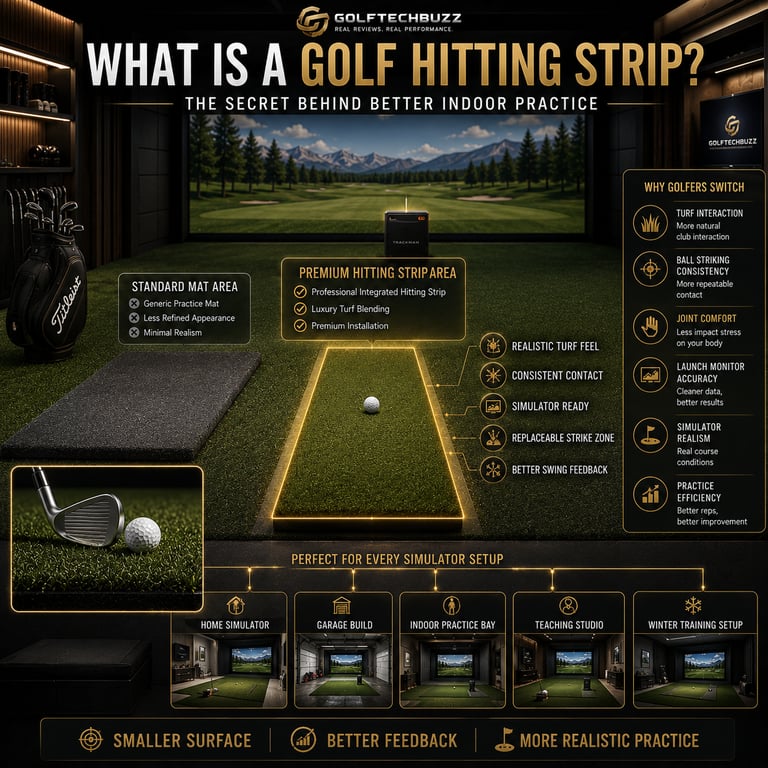
Here’s the deal — a golf hitting strip is essentially a long, narrow section of fake grass designed to replicate the feel and response of real turf. Unlike your basic hitting mat that often feels like hitting off a concrete slab with some carpet glued on top, these strips have turf fibers calibrated to a certain height and density so the ball reacts almost like it’s on a real fairway or rough. There’s usually a shock-absorbing foam or rubber backing to soften the impact, save your joints, and provide a more natural “give” when you swing.
You’ll find golf hitting strips everywhere from high-end golf simulators to small home practice bays. They’re often installed on flat, stable floors like garage concrete or basement slabs where you can swing freely without worrying about damaging your floor or messing up your shot feedback.
How Does a Golf Hitting Strip Work?
At its core, it’s simple physics combined with smart material design. The synthetic turf fibers mimic the density and height of natural grass blades, giving your golf ball the right kind of resistance and bounce. The shock-absorbing layer beneath not only protects your wrists, elbows, and knees but also ensures your club reacts similarly to hitting off grass — no jarring rebounds or weird bounces.
Hit off a golf hitting strip, and you'll get consistent turf interaction that helps you train your swing dynamics properly. The ball won’t rocket off like it’s sitting on concrete, nor will it sink into a soft mat that’s too thick. This consistency is what helps you zero in on swing path, angle of attack, and ball position — all key factors in dialing in your shots.
Benefits of Using a Golf Hitting Strip
I’ve seen guys try this and that for their indoor practice setups, and here’s why you want a quality golf hitting strip in your corner:
Realistic Turf Feel: Unlike generic mats, hitting strips better replicate natural turf conditions, so what you practice indoors translates better to the course.
Consistent Surface: You get uniform conditions every time you practice — no surprises from uneven grass chunks or worn-out carpet mats.
Injury Prevention: The shock-absorbing backing reduces stress on your joints, which is a godsend when you’re pounding balls daily during winter leagues.
Versatility: These strips are ideal for indoor simulators, garages, basements, or even portable versions you bring to the driving range or outdoor setups without grass.
Improved Swing Feedback: Better turf interaction means more accurate feedback on your strike quality, helping you fix swings faster.
Simulator Compatibility: Many hitting strips are designed to work smoothly with launch monitors and golf simulators, maximizing your practice efficiency.
Many golfers choose strips specifically because of the comfort benefits discussed in Do Golf Hitting Strips Reduce Joint Pain?
Different Types of Golf Hitting Surfaces: Strips vs Mats
If you’ve poked around golf practice gear, you’ve probably come across hitting mats. What separates a hitting strip from a hitting mat? Here’s the skinny:
Size & Shape: A hitting strip is usually longer and narrower, mimicking a strip of fairway turf, whereas hitting mats tend to be wider and sometimes thicker blocks.
Material Quality: Hitting strips often use higher-grade turf fibers with specialized backing to replicate turf feel more accurately. Mats can be made from cheaper synthetic materials that turn hitting into a punishment for your wrists.
Realism: Strips offer better feedback on ball strike and club impact due to their turf density and shock absorption, while mats tend to be harder and less forgiving.
Use Case: Strips are made for practice where swing dynamics matter — the kind of setup serious golfers prefer, especially for simulators. Mats can be handy for casual buckets but often don't tell the whole story on your ball striking.
If I’m being honest, don’t settle for any old hitting mat if you want solid practice indoors. A well-chosen golf hitting strip pays dividends in how your swing feels and adapts.
For a deeper breakdown, see Golf Simulator Hitting Mat vs Hitting Strip and Are Golf Hitting Strips Better Than Full Mats?
Installation and Space Requirements
Installing a golf hitting strip isn’t rocket science, but it’s not just rolling out a carpet either. You need:
Flat and Stable Flooring: Concrete, hardwood, or tile floors work best. Uneven or soft floors can cause the strip to shift or distort your shot feedback.
Enough Space: Make sure you have room for your full swing—no cramped closets or tight corners. You don’t want to end up swinging like you’re dodging furniture.
Proper Securing: Depending on the strip’s backing, taping or fixing it in place might be necessary to avoid sliding. Some premium strips come with anti-slip features included.
Modular Lengths: Some manufacturers offer strips in sections, so you can customize the length based on your space and practice goals.
Golfers building permanent simulator rooms should also check out How to Build a DIY Golf Simulator Floor.
Who Should Use a Golf Hitting Strip?
Everyone from weekend warriors to low handicappers can benefit from using a golf hitting strip, but here’s how I’d break it down:
Serious Sim Player: If you’re setting up a home simulator, this is a must-have. It elevates the realism and provides reliable shot data.
Winter League Enthusiasts: Practicing indoors all winter without losing your turf feel is the only way to avoid going rusty.
Instructors and Coaches: Golf teachers love it because it creates a consistent hitting environment, making it easier to diagnose swings.
Beginners: Even newbies can benefit—trust me, training with good turf helps develop better ball striking early.
Travelers and Portable Setups: There are lightweight hitting strips designed to pack up and take anywhere, perfect for travel practice.
If you're shopping for one, our Best Golf Simulator Hitting Strips guide compares some of the top options available.
Common Mistakes When Choosing or Using a Golf Hitting Strip
Buying Cheap, Low-Quality Mats Instead: They don’t mimic real turf feel, wreck your practice rhythm, and can cause bad swing habits.
Ignoring Shock Absorption: Hard, thin strips can beat up your joints after a few sessions. Invest in a quality backing.
Setting Up on Uneven Surfaces: This throws off ball roll and club interaction, making your practice unreliable.
Choosing the Wrong Thickness: Too thin feels like hitting bare floor, too thick can feel spongy and unnatural.
Neglecting Space Needs: If you don’t have enough room to swing freely, you won’t practice your real shot mechanics.
Not Checking Simulator Compatibility: Some hitting strips work better with sensor setups than others — check before you buy.
Assuming All Strips Are the Same: Indoor and outdoor strips differ; don’t try to use a flimsy indoor strip outside.
Another mistake is overlooking the flooring underneath. If you're installing over a garage slab, review Can You Put a Golf Hitting Mat Directly on Concrete?
FAQs About Golf Hitting Strips
What is the difference between a golf hitting strip and a golf hitting mat?
A golf hitting strip is narrower, uses more realistic turf fibers, and often has a shock-absorbing backing for better feedback, while mats are generally wider, thicker, and less turf-like.
Can a golf hitting strip be used outdoors or only indoors?
Most high-quality hitting strips are designed primarily for indoor use or covered areas. Some versions are made for outdoor use with water-resistant materials, but check product details before taking it outside.
How thick should a golf hitting strip be for home use?
Aim for a thickness between 0.5 to 1.5 inches with a foam or rubber backing. This provides enough cushioning and realistic turf feel without being too soft or stiff.
Do golf hitting strips work with all golf simulators?
Not necessarily. Compatibility depends on strip size, surface texture, and the simulator’s sensor technology. Verify with the manufacturer if it’s meant to work together.
What maintenance do golf hitting strips require?
Regular brushing to keep the fibers upright and occasional cleaning to remove dirt or debris is usually enough. Avoid harsh chemicals and store them flat to prevent curling.
Can beginners benefit from using a golf hitting strip or is it only for advanced players?
Beginners absolutely benefit—practicing on realistic turf helps develop good ball striking habits from the start and prevents developing bad swing mechanics.
Are golf hitting strips suitable for practicing with real golf balls?
Yes, that’s the point. They’re made to withstand real ball impacts and provide realistic ball feedback unlike carpet or cheap mats.
How do golf hitting strips improve ball striking consistency?
The consistent turf feel and shock absorption allow for uniform contact conditions, helping golfers focus on improving swing mechanics rather than compensating for weird turf reactions.
Conclusion
Look, if you’re serious about practicing golf indoors and want to keep your swing sharp off the course, a golf hitting strip is one of the smartest investments you can make. These strips aren’t just fancy carpets; they’re designed to replicate real turf feel, protect your joints, and provide consistent feedback that helps your game improve faster. Whether you’re running a winter league, teaching some golf fundamentals, or dialing in your launch monitor data, a quality hitting strip gets you closer to the feel of real grass without leaving the house.
If you're still comparing options, spend some time with Best Golf Simulator Hitting Strips, Golf Simulator Hitting Mat vs Hitting Strip, and Why Are Golfers Switching to Hitting Strips? before making your final decision.
Don’t waste your time swinging off cheap mats that beat up your wrists and confuse your swing. Get a hitting strip that matches your setup, space, and simulator, then watch how much more enjoyable—and effective—your practice becomes. Trust me, your golf game will thank you for it.
© 2026 GolfTechBuzz. All rights reserved.
Golf Tech Buzz
Performance Through Data
Practical guides, real-world setups, and unbiased comparisons for golfers building smarter practice environments.
General Inquiries: