

Are Golf Hitting Strips Better Than Full Mats?
Explore how golf hitting strips compare to full mats in portability, realism, durability, and maintenance for your ideal golf practice surface.
SIMULATOR MATS
Golf Tech Buzz Editorial Team - Led by AJ “Buzz” Eichman
6/12/20267 min read
If you’re setting up a golf practice area—whether it’s in the garage, basement, or a nook somewhere—you’ve probably bumped into the age-old question: golf hitting strips or full golf mats? Both claim to bring the green home, but each plays by different rules when it comes to feel, durability, portability, and maintenance. I’ve fiddled with both, run winter leagues on them, and here’s the real scoop based on years of swinging, smoking cigars, and knowing my turf.
If you're comparing practice surfaces for your simulator setup, it helps to understand how both options fit into the larger world of Golf Simulators and the complete Golf Simulator Hitting Mat Guide.
Quick Verdict
Golf hitting strips offer better portability and mimic real turf feel, making them ideal for irons and wedges.
Full golf mats provide a more durable, stable, and consistent platform, great for heavy hitters and more extensive practice zones.
Maintenance is simpler with hitting strips due to their size, but they tend to wear faster under heavy use.
Your choice boils down to space, budget, and how realistic or rugged you want your setup to feel.
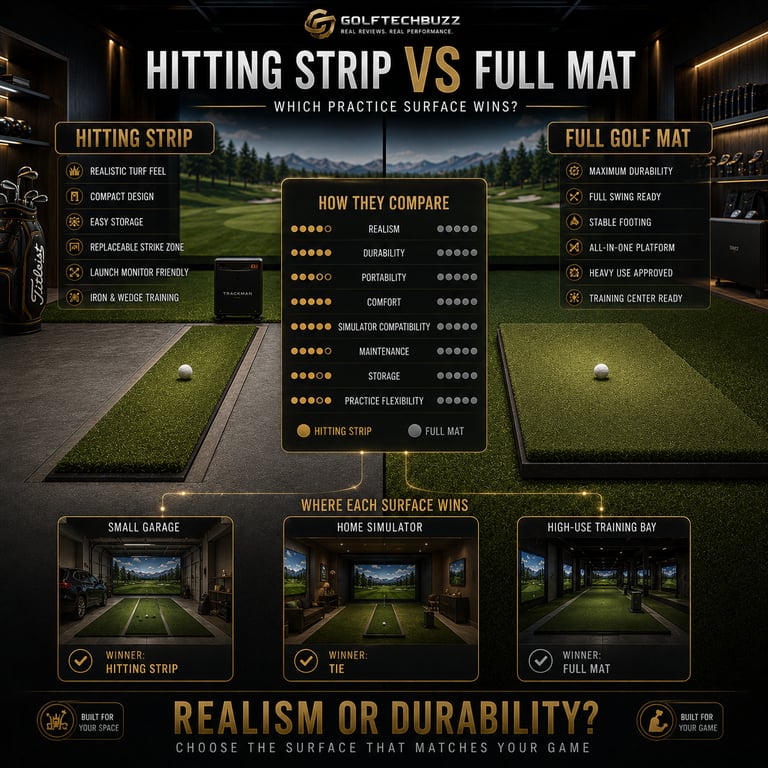

What Are Golf Hitting Strips and How Do They Work?
Golf hitting strips are narrow synthetic turf sections, usually around 1 to 2 feet wide and 4 to 6 feet long. Think of them as little green runways designed to simulate the look and feel of a fairway or tee. They focus on replicating that “click” you get when irons and wedges meet the turf—the kind that tells your swing if something’s off.
These strips are often chosen by golfers with limited space who need something portable or easy to store away. Since they’re smaller, you can set them up quickly anywhere—garage floor, driveway, even indoors. Some hitting strips come with replaceable turf patches, which helps stretch their lifespan when you’re pounding out shot after shot.
If you're new to the concept, What Is a Golf Hitting Strip? provides a complete overview.
Understanding Full Golf Mats: Features and Benefits
Now, full golf mats are the big dogs in the room—covering more territory, usually around 4x6 feet or larger, and often layered with rubber or foam underlayments. That cushioning not only absorbs shock for your joints but also offers a stable, consistent hitting surface no matter your swing style or club choice.
If you’re a grinder planning on heavy use—like daily winter practice or sim golf tournaments—these mats tend to last longer. Their robustness means you get a reliable platform for both full swings and chips, indoors or out. The trade-off? They can be bulky to move around and may eat up prime space in your setup.
If you're shopping for one, our Best Golf Simulator Hitting Mats guide covers the top options available today.
Comparing Durability: Hitting Strips vs Full Mats
Here’s where things get interesting. The durability of your practice surface is mission critical, especially if you practice regularly.
Hitting strips, while slick and turf-realistic, are more prone to wear and tear simply due to their size and turf thickness. The smaller footprint means the same spot gets hammered repeatedly, leading to quicker degradation. That said, many premium strips offer replaceable turf sections or tougher synthetic blends to keep up with the abuse.
Full mats generally take a beating better. Thanks to thicker turf layers and cushioned backing, they hold up under heavy swings and extended use. If you’re smashing full drives regularly or practicing indoors where space allows, a full mat’s going to stay consistent longer. You’ll want to check turf quality and underlayment here—some budget mats skimp on shock absorption, which can feel harsh and abuse your wrists.
For golfers concerned about long-term durability, How Long Do Golf Simulator Hitting Mats Last? dives deeper into expected lifespan and wear patterns.
Realism and Feel: Which Surface Mimics Natural Turf Better?
If one thing drives golf nerds crazy, it’s a hitting surface that feels like you’re hacking at a carpet square in your man cave—and we all deserve better than that. The goal is smooth turf interaction that teaches you where your clubhead hits and how it interacts with the ground.
Golf hitting strips often edge out full mats here because of their narrower design and turf composition that better mimics fairway grass. You get more natural divot feedback and a closer feel to the real deal, which especially benefits iron and wedge practice. Some strips even feature multi-layered turf to simulate both fairway and rough.
Full mats can feel a bit sturdier and firmer, which is great for stability but might sacrifice that subtle turf feel. Softer mats may absorb ball impact but reduce feedback, which can make it trickier to diagnose strikes and tweak your swing. If you want the kind of feel that preps you for the course, hitting strips tend to deliver better natural turf vibes.
That's one of the biggest reasons covered in Why Are Golfers Switching to Hitting Strips?
Portability and Setup: Finding the Right Fit for Your Space
Portability is a huge factor that often gets overlooked. I’ve seen guys try plopping down full mats in cramped garage corners and instantly regret it because moving or storing them is a pain.
Golf hitting strips are perfect if space is tight or if you like to practice in multiple locations. Their smaller size means lightweight, easy roll-ups, and fast setups. That’s a game-changer for folks who don’t want a permanent green patch taking over basement floor space or need quick pack-up after a session.
Full mats require dedicated space. They’re heavy, rigid, and usually meant to stay put. That stability is great for steady footing but zero portability. If your practice zone doubles as a hangout or workspace, or if you want to move around, hitting strips are your best buddy.
Golfers building permanent practice spaces should also review How to Build a DIY Golf Simulator Floor.
Maintenance Tips to Extend the Life of Your Practice Surface
Both hitting strips and full mats aren’t totally set-and-forget. To keep that turf lush and meaningful swing feedback coming, a bit of upkeep is essential.
Regular cleaning: Dust, dirt, and rubber bits can mess with turf fibers and affect ball roll or club interaction. A quick vacuum or turf brush after every few sessions keeps things lively.
Rotate hitting spots: With hitting strips being smaller, avoiding wearing out the same spot repeatedly by moving your ball position is key.
Check for turf damage: Nail any loose seams or worn-out patches promptly, especially on hitting strips where replaceable sections are an option.
Avoid extreme weather: For outdoor setups, direct exposure to UV or rain can degrade turf faster, so cover or store your surfaces when not in use.
Common Mistakes to Avoid When Choosing Your Golf Practice Surface
Here’s the deal—nobody wants to waste cash or get stuck with gear that doesn’t cut it, so steer clear of these common pitfalls:
Assuming bigger mats always mean better practice: If you don’t have room or don’t use it regularly, all that turf can be dead weight.
Neglecting maintenance: Turf wears—you gotta clean and maintain or risk quick breakdown.
Using hitting strips on uneven or slippery surfaces: Your shot quality plummets if the strip slides or wobbles underfoot.
Ignoring turf quality: Cheap mats or strips might save a few bucks upfront but won’t give you realistic feedback or last long.
Buying lowest price without factoring durability: If you practice hard, cheap turf will balloon replacement costs.
Another mistake is ignoring comfort. Golfers who practice heavily should also review Do Golf Hitting Mats Cause Wrist and Elbow Pain? and Do Golf Hitting Strips Reduce Joint Pain?
Making Your Decision: Which Option Suits Your Practice Style?
If I’m being honest, your choice really hinges on your situation:
Got limited space and want a turf feel closest to a real fairway? Go for golf hitting strips. They’re portable, easy to set up, and impressively realistic with your irons and wedges.
Planning to bomb full swings regularly and want a consistent, durable surface that lasts? Full golf mats are reliable. They offer stability and absorb impact nicely.
Budget tight? Look for mid-tier hitting strips with replaceable sections or starter-level full mats with decent turf quality.
Want to practice indoors with minimal hassle? Hitting strips win for ease of storage and setup.
Need a permanent fixture with stable footing? Full mats take the cake.
Both have their place, and neither is a blanket “better.” The trick is matching your practice habits, environment, and expectations.
FAQs
What are the main differences between golf hitting strips and full mats?
Hitting strips are thin, portable turf sections that mimic fairway feel and are great for limited space. Full mats are larger, more durable, and provide a stable hitting platform, ideal for heavy use and bigger practice zones.
Are golf hitting strips more realistic than full mats?
Usually, yes. Hitting strips often have turf designed to replicate natural grass closely, particularly for irons and wedges. Full mats focus more on stability and durability, sometimes at the expense of turf realism.
Which option is better for indoor practice spaces?
If you’re tight on space or want something easy to store, hitting strips are preferable. Full mats require dedicated, often permanent floor space.
How durable are golf hitting strips compared to full mats?
Full mats generally last longer due to thicker turf and cushioning. Hitting strips can wear out quicker but often feature replaceable turf patches to help.
What maintenance is required for each type of practice surface?
Both need regular cleaning to prevent dirt buildup, turf brushing, rotating ball positions, and prompt repairs. Hitting strips require more attention to turf wear due to smaller size.
Can hitting strips be used outside or only indoors?
They can be used outdoors but need to be stored or covered when not in use to protect from weather damage.
Do full mats provide better feedback for ball striking?
Full mats provide stable footing and consistent surface firmness but may offer less realistic turf feedback than hitting strips, which can affect shot feel.
Are there budget-friendly options for both hitting strips and full mats?
Yes. You can find entry-level hitting strips and mats, but beware of turf quality and durability trade-offs at the lowest price points.
Conclusion
Alright, listen—I’ve seen guys try this and that. At the end of the day, if you’re serious about improving your ball striking, picking the right practice surface is a big deal. Golf hitting strips bring portability and a more realistic turf feel to the table, especially if your setup is tight or you’re dialing in irons and wedges. Full golf mats are workhorses, built to withstand heavy sessions with stability that keeps your footing solid and your swings comfortable.
If you're still weighing your options, compare Best Golf Simulator Hitting Mats, Best Golf Simulator Hitting Strips, and Why Are Golfers Switching to Hitting Strips? before making your final decision.
So think of it like this: are you a nimble practice warrior who likes to set up shop quickly and mimic natural turf? Hitting strips have your back. Or are you the steady grind type, hammering out licks day in, day out, knowing durability and consistency rule the roost? Full mats are your steady companion.
Either way, don’t settle for cheap turf that’s destined to disappoint. Invest smart, maintain your gear, and you’ll see the dividends on your game—whether that’s indoors, out, or anywhere in between. Now go get your swing on and maybe light up a cigar while you’re at it. Cheers to better ball striking!
© 2026 GolfTechBuzz. All rights reserved.
Golf Tech Buzz
Performance Through Data
Practical guides, real-world setups, and unbiased comparisons for golfers building smarter practice environments.
General Inquiries: