

Do Golf Hitting Strips Reduce Joint Pain?
Discover how golf hitting strips cushion impact to reduce joint pain, improving comfort and performance during indoor practice sessions.
SIMULATOR MATS
Golf Tech Buzz Editorial Team - Led by AJ “Buzz” Eichman
6/12/20266 min read
Look, I get it. You’re grinding through the winter months inside your golf simulator or practice mat, but after a few hundred swings your wrists, elbows, or knees start barking back. Joint pain isn’t just annoying—it can sideline your game and mess with your rhythm. That’s where golf hitting strips step in, promising a softer, more joint-friendly hitting surface that aims to ease the wear and tear on your body. But do they actually deliver relief, or is this just another gimmick you’ll toss aside after a weekend?
Here’s the deal: golf hitting strips are thin, flexible liners designed for hitting mats and simulator platforms, made to mimic the feel of real turf while softening the brutal impact your joints usually take during repeated swings. They cushion the shock, potentially trimming down joint strain, and helping you stay in the game longer without that nagging pain. I’ve installed and tested plenty, so let me break down what actually works and what’s just fluff.
If you're considering a hitting strip setup, it helps to understand how they fit into the larger world of Golf Simulators and the complete Golf Simulator Hitting Mat Guide.
Quick Verdict
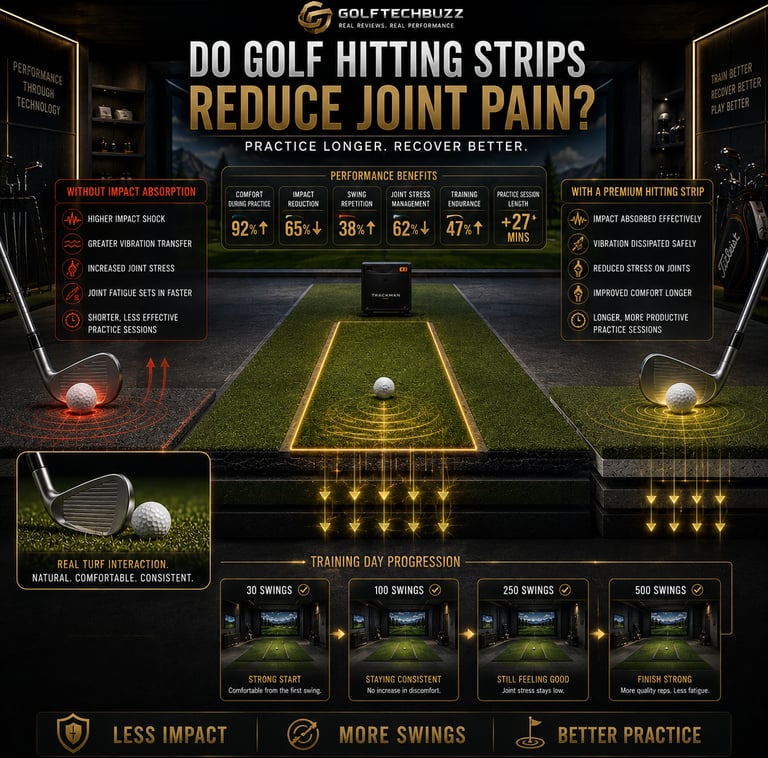
Golf hitting strips can help reduce joint pain by cushioning the impact forces from repeated swings.
They work best when paired with good swing mechanics and proper warm-ups, not as a standalone cure.
Quality and thickness matter—cheap, thin strips won’t do the job.
Ideal for indoor simulators, home setups, and anyone dealing with golf-related joint discomfort.
What Are Golf Hitting Strips?
Think of golf hitting strips as the unsung heroes beneath your mat or simulator. They’re usually made of durable materials like rubber, polymer blends, or foam composites. Their job is to replicate the feel of natural turf, but crucially, with an added layer of shock absorption. Thickness varies between 3mm and 10mm, striking a balance between soft enough to protect your joints while firm enough to keep your stance true and your ball flight consistent.
They come either as adhesive-backed strips or mats you lay down on your practice surface. Some even have a turf-like fiber top to better imitate grass, so you don’t lose that familiar swing feel.
If you're new to them, start with What Is a Golf Hitting Strip?
How Do Hitting Strips Work to Protect Your Joints?
Every golf swing delivers a jolt not just to your club and ball, but also through your hands, wrists, elbows, knees, and even hips. Over time, those thousands of impacts build stress and inflammation, leading to joint pain or even injury.
Hitting strips act as a shock absorber. When your club hits the ball, instead of striking a hard, unforgiving surface (like concrete or a thin, stiff mat), the impact energy gets slightly cushioned and dispersed through the strip. This extra give reduces the violent forces transmitted through your joints, potentially lowering the cumulative strain.
It’s like adding a quality suspension system to your car—you still feel the road, but the bumps don’t rattle your bones.
Many golfers first discover this benefit after experiencing the issues discussed in Do Golf Hitting Mats Cause Wrist and Elbow Pain?
Benefits of Using Golf Hitting Strips for Joint Pain Reduction
If you’re someone who practices a lot indoors or compiles hundreds of swings during winter leagues and training sessions, hitting strips can make a noticeable difference.
Reduced Shock Transmission: Soft but stable, hitting strips dampen impact forces, easing strain on wrists, elbows, and knees.
Enhanced Comfort: Less discomfort means longer, more productive practice sessions without joint flare-ups.
Real Turf Feel: Many strips are designed to mimic grass, which supports proper swing mechanics—important because bad mechanics + joint pain is a vicious cycle.
Easy Installation: Most hitting strips simply peel and stick to your mat or floor, no special skills needed.
Better for Arthritic Golfers: Those with pre-existing joint pain or arthritis find hitting strips particularly helpful for managing pain while still keeping active in the game.
But remember, hitting strips aren’t magic shields. They help cushion the blow but won’t fix underlying swing flaws, poor conditioning, or serious joint issues.
Golfers looking for the most forgiving options should also compare products in our Best Golf Simulator Hitting Strips guide.
Common Mistakes When Using Golf Hitting Strips
I’ve seen guys try this and get frustrated because they expected hitting strips to erase pain overnight or turn a bad swing into a good one. Here’s what to avoid:
Expecting them to eliminate all joint pain: They reduce shock but don’t address swing errors or other physical issues contributing to joint stress.
Choosing cheap, thin strips: Not all hitting strips cushion equally. Too thin or low-quality material does little to protect joints.
Improper Installation: Wrinkles, bubbles, or uneven placement create an inconsistent hitting surface, which can throw off your stroke and actually increase stress.
Using strips on poor mats: If your base mat is rock hard and doesn’t absorb shock, hitting strips can only do so much.
Neglecting proper warm-ups and joint care: No cushy strip replaces good stretching, icing, strengthening exercises, or professional advice.
Another common mistake is overlooking the flooring underneath. If you're practicing on a garage slab, review How to Build a DIY Golf Simulator Floor and Can You Put a Golf Hitting Mat Directly on Concrete?
Who Can Benefit Most from Golf Hitting Strips?
Truth be told, almost any golfer training indoors can benefit from hitting strips. But they’re especially valuable for:
Older golfers or those with arthritis: The cushioning helps manage and prevent pain during frequent practice.
Golfers recovering from injury: Gentle shock absorption can make rehab swings easier on healing joints.
Garage or concrete floor setups: If you’re hitting off hard floors, hitting strips turn an abusive surface into a friendly one.
Winter league players: For anyone clocking serious indoor reps, reducing joint load helps keep you swinging through tough weather.
Beginners focusing on swing consistency: A comfortable, realistic feel reduces tension and encourages better movements.
Installation and Maintenance Tips
Installing hitting strips is usually a breeze—just peel off the adhesive back and lay it down flat on your hitting mat or designated area. But here’s my pro tip: clean the surface well before application to prevent peeling or sliding, and take your time smoothing out bubbles or wrinkles.
Once installed, maintain your strips by wiping them down with mild soap and water to keep dust and grime off. Avoid harsh cleaners that can degrade the material. Inspect occasionally for wear—once the strip gets too thin or torn, it won’t protect your joints anymore.
If durability is a concern, Why Are Golfers Switching to Hitting Strips? explains why many golfers now prefer replaceable hitting-strip systems.
Other Methods for Golf Joint Pain Relief
Let’s keep it real—hitting strips are part of a bigger toolkit.
Swing Mechanics: Fixing flaws reduces unnecessary joint stress.
Strength and Flexibility Training: Conditioning muscles around joints helps absorb shock naturally.
Proper Warm-ups and Stretching: Prepare your joints before every session.
Pain Management: Ice, anti-inflammatories, or physiotherapy can complement your practice routine.
Quality Footwear and Insoles: Good shoes help stabilize the lower body and relieve knee or hip pain.
The hitting strips ease one piece of the puzzle but aren’t a substitute for overall joint care.
Frequently Asked Questions About Golf Hitting Strips
What are golf hitting strips made of?
Most hitting strips consist of rubber, foam composites, or polymer blends designed for durability and shock absorption, often topped with synthetic turf fibers.
How do hitting strips reduce joint pain?
They cushion and disperse impact forces during ball strikes, reducing shock transfer to joints like wrists, elbows, and knees.
Can hitting strips prevent golf-related injuries?
They help lower repetitive stress on joints, which may reduce injury risk, but proper technique and conditioning remain critical.
Are hitting strips suitable for all skill levels?
Absolutely. Beginners through pros training indoors can benefit from the added comfort and joint protection.
How do I install hitting strips correctly?
Clean your mat’s surface, peel off the adhesive backing, and lay the strip flat, smoothing out air bubbles.
Do hitting strips affect ball flight or swing feel?
High-quality strips are designed to mimic turf feel and minimally impact ball response, though cheap ones might feel artificial.
Can hitting strips be used outdoors on real turf?
They’re mainly intended for indoor mats and simulators; using them outdoors on natural turf is uncommon and less effective.
What maintenance is required for hitting strips?
Regular cleaning with mild soap and water keeps them in good shape. Watch for wear and replace when necessary.
Practical Conclusion
If you’re clocking hours in your simulator or home practice area and battling golf joint pain, hitting strips are a simple, effective addition. They’re not a cure-all but offer genuine shock absorption that can make your practice sessions easier on the body. Make sure you choose quality, install them right, and keep them as part of a broader joint care strategy.
If you're still deciding between practice surfaces, compare Best Golf Simulator Hitting Strips, Are Golf Hitting Strips Better Than Full Mats?, and Golf Simulator Hitting Mat vs Hitting Strip before making your final choice.
At the end of the day, golf is a game of feel, and when your joints aren’t screaming at you after every swing, that feel improves dramatically. So do yourself a favor, drop a hitting strip on your mat, and swing easy—your body will thank you.
© 2026 GolfTechBuzz. All rights reserved.
Golf Tech Buzz
Performance Through Data
Practical guides, real-world setups, and unbiased comparisons for golfers building smarter practice environments.
General Inquiries: