
How Long Do Golf Simulator Hitting Mats Last?
Discover how long golf simulator hitting mats last and learn key tips to care for and extend the lifespan of your golf hitting mat for lasting performance.
SIMULATOR MATS
Golf Tech Buzz Editorial Team - Led by AJ “Buzz” Eichman
6/12/20267 min read
If you’re serious about your indoor golf setup, you know that the hitting mat is where the rubber meets the road—or should I say, where the club meets the turf. These mats take a beating from your swings day in and day out, so getting clued in on their lifespan is key to keeping your game sharp and your gear intact. I’ve seen it all in my simulator leagues—guys banging away on mats that looked like they’d been through a war zone and others still fresh after years of use. So, here’s the deal on how long golf simulator hitting mats last, what makes one mat tougher than another, and how you can squeeze every ounce of life out of yours.
Before investing in a hitting surface, it's worth understanding how durability fits into the larger world of Golf Simulators and the complete Golf Simulator Hitting Mat Guide.
Quick Verdict
Typical golf simulator hitting mats last between 3 to 10 years depending on quality and use.
Premium mats with dense foam and layered turf go the distance (up to a decade) under regular use.
Frequent, heavy swings and poor maintenance can shave years off mat durability.
Simple care tips like cleaning, rotating, and using tees properly can extend mat life significantly.
What Are Golf Simulator Hitting Mats?
First off, let’s quickly get on the same page about what these mats actually are. A golf simulator hitting mat is more than just a patch of green turf slapped on the floor. It’s a carefully engineered synthetic surface designed to withstand thousands of swings indoors without falling apart or wrecking your clubs. Typically, these mats combine synthetic turf fibers mimicking fairway grass with a multi-layer foam backing that absorbs shock and protects your joints. Some premium mats even have replaceable turf inserts, letting you swap out just the worn grass instead of the entire mat. But no matter how fancy, they all share the mission of providing a consistent, realistic hitting surface while standing up to your swing force.
If you're new to simulator surfaces, start with What Is a Golf Simulator Hitting Mat? for a complete overview.
Typical Lifespan of Golf Simulator Mats
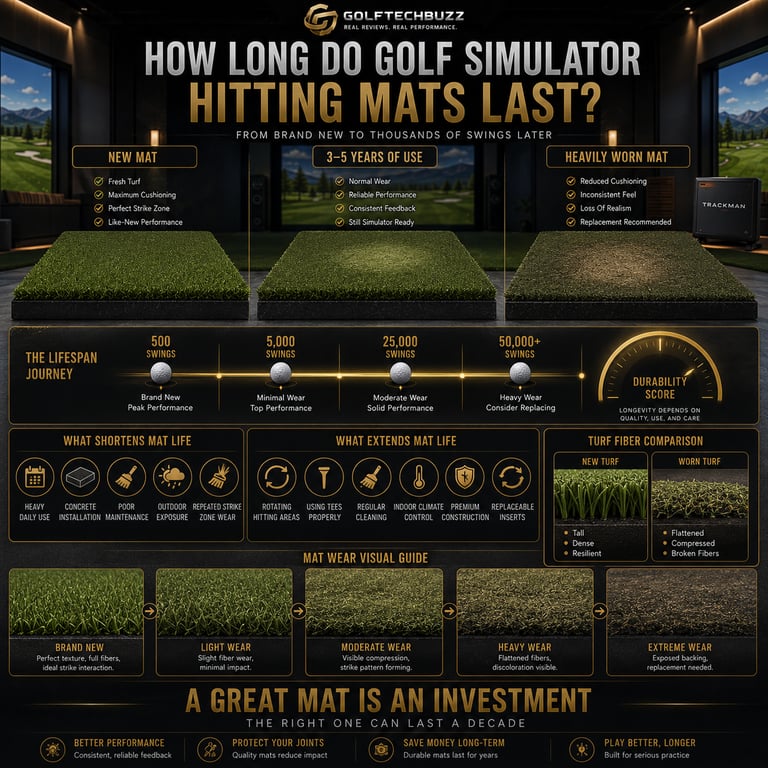
If you’re asking, “How long do golf mats last?” the honest answer is—it depends. Basic mats sitting in a casual home setup tend to hang in there for about 3 to 5 years before showing major signs of wear. You might start to see bald patches, compressed foam, or frayed fibers. On the other hand, those premium models boasting thick, dense foam and layered turf can easily go 5 to 10 years or more, especially if you maintain them right.
But remember, all these numbers are ballpark figures. Your mileage will vary based on how often you practice, your swing speed, and the care you put into your setup. If you’re smacking away dozens of balls every day or running a busy training center, you’ll burn through mats faster than your weekend warrior neighbor playing twice a month.
Many of the products featured in our Best Golf Simulator Hitting Mats guide are specifically designed for long-term durability.
Factors Affecting Mat Durability
Here’s where most guys get caught off guard. Not all hitting mats are built alike, and if you skimp on materials or toss care out the window, your mat’s lifespan can nosedive.
Materials Matter Most
The best golf hitting mats for longevity combine dense, multi-layered turf fibers with thick, resilient foam backing. The turf gives you that real fairway feel—soft but firm—while the foam absorbs the impact, protecting both the mat and your wrists. Lower-quality mats often use thin turf or less dense foam, which breaks down faster and feels flat or spongy.
Frequency and Force of Use
If you’re swinging hard and often (and I mean daily sessions grinding hundreds of balls), your mat has to work overtime. Aggressive swings, especially with drivers, can crush turf fibers and compress foam quicker. If that sounds like you, expect to replace mats more often unless you invest in top-of-the-line durability.
Environment and Setup
Where you put your mat matters. Garage setups with stable temperature and humidity keep materials from degrading, extending mat life. Outdoor mats tossed on concrete or exposed to sun and moisture deteriorate fast because UV rays and moisture are nasty to synthetic turf and foam.
Golfers installing mats on hard surfaces should also review Can You Put a Golf Hitting Mat Directly on Concrete?
Maintenance and Care
Just like your clubs, your mat asks for some TLC. Regularly cleaning debris off and vacuuming helps turf stay clean and resilient. Avoid dragging heavy objects on it or stepping with cleats. Also, rotating the mat occasionally so wear isn’t concentrated in one spot can keep it even longer.
Best Materials and Construction for Longevity
If you want a mat that lasts, go heavy on the density and layering. Mats that mimic fairway grass with deep, layered turf fibers and multiple dense foam backing layers are the gold standard. They not only hold up better but also give you that authentic turf interaction that most indoor mats lack. Some manufacturers offer replaceable turf inserts—these can be a smart way to extend overall life without dropping a ton on a full replacement.
Don’t fall for thin, flat mats with cheap foam backing. I’ve seen guys try these and complain their clubs bounce weird or get dinged up. Not worth it.
Thickness plays a major role here as well, which is why How Thick Should a Golf Hitting Mat Be? remains one of the most important buying considerations.
Tips to Extend the Life of Your Hitting Mat
Alright, so you’ve got your mat, but you want to keep it looking and feeling fresh as long as humanly possible. Here’s the lowdown from someone who’s tested plenty of gear:
Clean regularly: Use a soft broom or vacuum to knock off dirt, grass bits, and debris. It keeps the turf fibers standing upright.
Use tees or tee holders: Hitting bare turf fibers with a driver or long irons wears them down fast. A good rubber tee or dedicated tee holder keeps your turf pristine.
Rotate your mat: Don’t always step or swing in the exact same spot. Shifting foot and strike locations spreads the wear evenly.
Avoid sharp objects: No heavy cleats, spikes, or dragging clubs across the mat.
Control the environment: Keep mats out of direct sun and moisture if possible.
Use impact tape: Slap on impact protection tape in your strike zone to protect turf fibers from heavy wear.
Common Mistakes That Shorten Mat Life
Here’s where I see guys drop the ball:
Neglecting cleaning: Letting dirt and debris pile up suffocates turf fibers and accelerates wear.
Skipping tees: Hitting iron shots directly into turf fibers tears them up fast.
Not rotating mats: Focusing impacts on one spot crushes foam and turf there almost immediately.
Choosing cheap mats just to save bucks can backfire, leading to rapid breakdown and more frequent replacements.
Using real golf balls instead of practice balls designed for simulators can damage mats quicker.
Playing outside on indoor mats exposes synthetic materials to UV and moisture damage.
Another mistake is ignoring how the hitting surface affects comfort. As mats wear down, golfers often begin noticing issues discussed in Do Golf Hitting Mats Cause Wrist and Elbow Pain?
When and How to Replace Your Golf Simulator Mat
If your mat feels spongey underfoot, has dead or bald patches, or starts giving your clubface inconsistent feedback, it’s time to think about swapping it out. Worn mats can mess with your swing feel and even chip away at your clubs. Replacing at the right time saves money and frustration long-term.
When shopping for a new mat, weigh your budget against how much you use it. If you’re a daily grinder, spend more on a dense, layered turf with thick foam backing. For casual play, mid-range mats with decent construction can do the job.
And a quick pro tip: if possible, buy mats with replaceable inserts or with a warranty that covers premature wear. It’s like insurance on your investment.
Golfers looking for maximum longevity may also want to compare Best Golf Simulator Hitting Strips, since replaceable hitting sections can reduce long-term costs.
Frequently Asked Questions
How long do golf simulator hitting mats typically last?
Most decent mats last 3 to 5 years with regular use, while premium mats get 5 to 10 years or more, depending on care and frequency of use.
What are the best materials for a durable hitting mat?
Dense, multi-layer synthetic turf fibers paired with thick, high-density foam backing offer the best durability and realistic feel.
How can I extend the life of my golf simulator mat?
Keep it clean, use tees, rotate your hitting spots, avoid outdoor exposure, and consider impact protection tape to guard turf fibers.
Is it better to use tees or hit off the mat directly?
Definitely use rubber tees or dedicated tee holders. Hitting directly on turf fibers wears them out fast, especially with irons and drivers.
Can I clean my golf hitting mat, and how often?
Yes, regular cleaning with a vacuum or soft broom is recommended weekly or after heavy use to remove debris that damages fibers.
What happens if my hitting mat gets worn out?
It loses shock absorption, your swing feel suffers, and your golf clubs could get damaged from uneven or hard spots.
Are more expensive mats always more durable?
Generally, yes. Premium mats have better turf design and foam density that extend life, but only if you maintain them properly. Cheap mats wear out faster even with good care.
Can outdoor use affect the lifespan of simulator mats?
Absolutely. UV rays and moisture break down turf fibers and foam backing quickly, so outdoor use shortens mat life dramatically.
Conclusion
Look, your golf simulator hitting mat is the unsung hero of your practice setup. It takes a pounding every session, and understanding how long these mats last—and more importantly, how to keep them going—can save you headaches and help keep your game consistent. Investing in a higher-quality mat upfront and giving it the right maintenance isn’t just smart—it’s essential if you want that authentic, fairway feel indoors for years.
If you're currently evaluating new hitting surfaces, compare Best Golf Simulator Hitting Mats, Best Golf Simulator Hitting Strips, and Golf Simulator Hitting Mat vs Hitting Strip before making your next purchase.
So clean it, tee it right, rotate it when needed, and watch your mat last longer than most of your drives. And remember, when your mat’s toast, replace it before it wrecks your sticks. Keep swinging, friend.
© 2026 GolfTechBuzz. All rights reserved.
Golf Tech Buzz
Performance Through Data
Practical guides, real-world setups, and unbiased comparisons for golfers building smarter practice environments.
General Inquiries: