

What Is a Golf Simulator Hitting Mat?
A golf simulator hitting mat is a durable, realistic turf surface designed to replicate real fairway grass indoors, enhancing practice accuracy and protecting gear.
SIMULATOR MATS
Golf Tech Buzz Editorial Team - Led by AJ “Buzz” Eichman
6/12/20266 min read
If you’re setting up an indoor golf simulator or upgrading your golf cave, there’s one piece of gear you can’t overlook: the golf simulator hitting mat. It might seem like a simple green patch, but trust me, this is where your indoor golf experience either shines or falls flat. I’ve tested more mats than I care to admit and run winter leagues where that hitting surface needs to perform every single shot like it’s the real deal. Here’s the lowdown on what a golf simulator hitting mat is, why it’s critical, and how to pick the right one for your setup.
If you're building a complete indoor setup, it's also worth understanding how hitting mats fit into the larger world of Golf Simulators and the Golf Simulator Hitting Mat Guide before making a purchase.
Quick Verdict
A golf simulator hitting mat is a specially designed turf surface that replicates real fairway grass indoors, letting you practice swings with realistic ball contact.
Thickness and turf quality vary widely—thicker mats cushion your joints and clubs better but need room and budget.
The best mats balance durability, realistic ball interaction, and protection for your floor and simulator gear.
Choosing the wrong mat can wreck your clubs, mess with simulator sensors, and ruin practice consistency.
What Is a Golf Simulator Hitting Mat?
Here’s the deal: a golf simulator hitting mat isn’t just some piece of old carpet or cheap fake grass. It’s a rugged, realistically textured mat meant to mimic the feel of solid turf where you tee off or hit from the fairway. The whole purpose is to give your indoor swings real feedback—no slipperiness, no harsh carpet blowback, just a solid “click” and a proper lie for your ball every time you tee it up or drop it on the mat.
These mats come in various thicknesses and turf constructions, with material designed to stand up to thousands of club strikes without wearing out or damaging your clubs. They cushion your joints too, which matters if you’re grinding out indoor practice sessions all winter long.
How Golf Simulator Hitting Mats Work
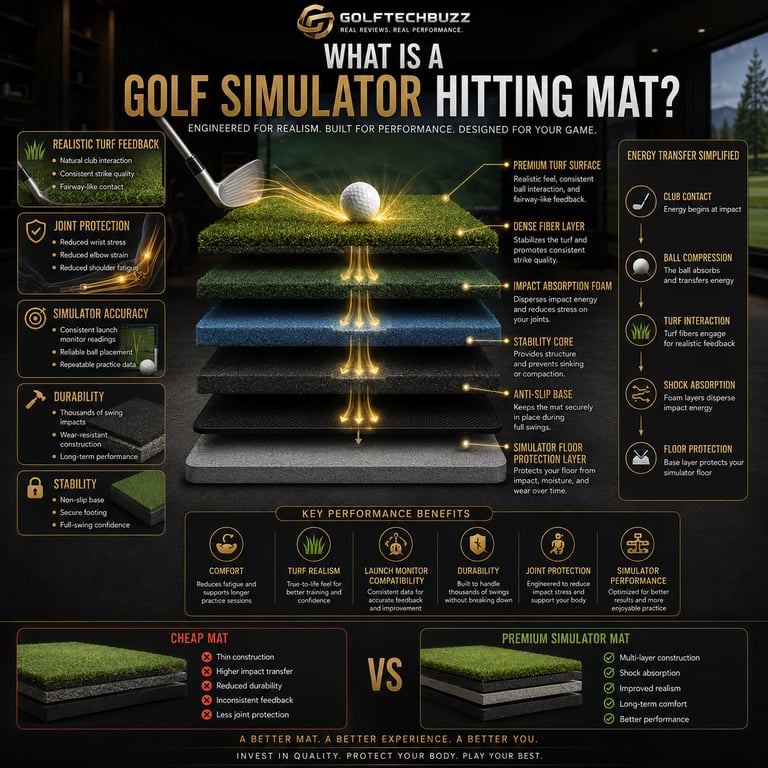
Unlike your average outdoor turf, simulator mats have to handle constant brutal impacts on what is basically an artificial surface. A well-made hitting mat usually has multiple layers:
A dense polymer turf or synthetic grass top that mimics roughness and ball roll.
Often an impact-absorbing foam core or padding to soften club strikes, protect your joints, and preserve your clubs’ edges.
A non-slip backing or edge binding to keep it planted during your backswing follow-through chaos.
Together, these elements create that sweet spot where your ball sits up properly, your club feels natural through impact, and the mat absorbs shock so your home floor doesn’t turn into Swiss cheese.
Key Features of Golf Simulator Mats
If you’re shopping, don’t settle for the first mat Uncle Joe recommends because it’s cheap. Here’s what you want in your simulator hitting mat:
Thickness: Typically ranges from about 0.5 to 1.5 inches. Thicker mats offer better shock absorption and realism, but can be bulky. If you’re serious, go 1-inch minimum. For a deeper dive, see How Thick Should a Golf Hitting Mat Be?
Turf Type & Pile Height: Higher pile and denser turf mean more realistic ball interaction. Some mimic a fairway lie; others simulate the perfect tee box.
Durability: Look for materials like polypropylene fibers designed for wear resistance. You want a mat that lasts seasons, not weekends.
Size & Coverage: Give yourself enough mat space so you’re not hanging off edges mid-swing. A 3x5 foot area minimum is ideal for full swings.
Backing & Stability: Non-slip backing or edge binding can be a game changer to keep the mat from sliding or curling.
Simulator Compatibility: Certain launch monitors require mats that don’t interfere with sensors. Avoid mats that give false readings or reduce accuracy.
Choosing the Right Mat for Your Setup
Look, not all golfers need tour-grade hitting mats, but if you’re serious about keeping your indoor game sharp and your gear safe, don’t skimp.
If you’re a weekend warrior with a limited budget and just want to toss a mat in the garage, a mid-range, 3/4-inch thick mat with good turf density will do. For anyone running a custom simulator room or training center, premium hitting mats with advanced shock absorption and sensor-friendly surfaces make all the difference.
If you're currently shopping, our Best Golf Simulator Hitting Mats guide compares some of the strongest options available today.
Also, consider your space. Thicker and bigger mats need room to breathe. And if your floor is concrete or hardwood, add an underlayer to protect it from impact damage. You should also review Can You Put a Golf Hitting Mat Directly on Concrete? before installation.
Benefits of Using a Quality Hitting Mat
The right golf simulator hitting mat does more than just keep your floors clean:
Realistic Turf Feedback: You get genuine ball roll and lie for consistent practice that translates outdoors.
Equipment Protection: Cushioned mats absorb shock, preventing dents on clubfaces and damage to your launch monitor sensors.
Injury Prevention: Thicker, softer mats reduce strain on your wrists, elbows, and shoulders from repetitive impacts.
Stability: A solid hitting surface allows confident swings without slipping or hopping.
Longevity: Higher quality mats last longer, so you’re not replacing your hitting mat every season.
Many golfers discover the comfort benefits after learning more about Do Golf Hitting Mats Cause Wrist and Elbow Pain?
Common Mistakes When Selecting a Golf Hitting Mat
I’ve seen guys try this and totally blow it. Here’s what to avoid:
Going Too Thin: Cheap, thin mats look like a steal but shred quickly and don’t protect clubs.
Ignoring Space Needs: You need enough room—not just for the mat but to swing freely without fear.
Overlooking Turf Quality: Not all “fake grass” is created equal. Low-pile turf doesn’t mimic the ball’s real interaction with turf.
Not Securing the Mat: A sliding or folding mat during swings wrecks your accuracy and muscle memory.
Forgetting Simulator Sensor Compatibility: Some mats interfere with launch monitor sensors, leading to inaccurate data.
Another mistake is failing to compare a complete mat against dedicated hitting strip systems. Golf Simulator Hitting Mat vs Hitting Strip explains the pros and cons of each approach.
Maintaining and Caring for Your Golf Simulator Hitting Mat
Keep your mat in good nick, and it’ll reward you. Regularly vacuum loose dirt and grass fragments. Wipe with a damp cloth to remove sweat and dust buildup. Avoid harsh chemicals or submerging the mat. Rotate the hitting zone occasionally to prevent wear patterns. And if your mat’s backing gets loose or curled, address it immediately to avoid slipping hazards.
If you're wondering about replacement schedules, How Long Do Golf Simulator Hitting Mats Last? covers what to expect from different mat styles.
FAQs About Golf Simulator Hitting Mats
What thickness is best for a golf simulator hitting mat?
If you’re serious, shoot for 1-inch thickness or more. Thicker mats protect joints, clubs, and provide realism. Beginners or casual players might get away with 0.5 to 0.75 inches, but it’s a trade-off.
Can I use a golf hitting mat outdoors or only indoors?
Most simulator mats are designed for indoor use. Outdoor exposure can degrade materials rapidly. For outdoor practice, look for mats specifically meant for that purpose.
How do golf simulator mats affect club performance or ball flight data?
A quality mat provides consistent ball positioning and impact feel, which helps launch monitors deliver accurate data. Cheap or worn mats can cause misreads by altering ball roll or sensor signals.
What are the key features to look for in the best golf simulator hitting mats?
Look for turf quality/pile height, thickness, impact-absorbing layers, size, stability features, and compatibility with your simulator sensors.
How do I maintain and clean my golf simulator hitting mat?
Vacuum regularly, wipe with damp cloth, avoid harsh cleaners, and store properly. Rotate hitting zones to prevent wear.
Will a hitting mat protect my floor and simulator equipment?
Yes, the padding in quality hitting mats absorbs shock from swings and ball strikes, safeguarding floors and sensors.
Are there mats designed specifically for different skill levels?
Yes. Beginners might use thinner, budget-friendly mats, while advanced players and instructors prefer premium mats with realistic turf and shock absorption.
Can I use a hitting mat with any brand of golf simulator?
Mostly yes, but always check your simulator’s compatibility requirements. Some launch monitors are sensitive to turf type or materials that can interfere with sensor accuracy.
Conclusion
If you’re kicking around the idea of buying a golf simulator hitting mat, don’t fall for the cheap thrills. I’ve been through too many worn-out mats, damaged clubs, and frustrating sensor read errors to recommend anything less than a solid, durable hitting surface that actually feels like the course. Your golf simulator is only as good as what you hit off, plain and simple. Get a mat that gives you realistic turf feedback, protects your gear, and stands up to the grind—and you’ll be dialing in that swing all winter long like a champ.
If you're still weighing your options, explore Best Golf Simulator Hitting Mats, Best Golf Simulator Hitting Strips, and Golf Simulator Hitting Mat vs Hitting Strip before making your final decision.
After all, you don’t just practice golf indoors—you practice it right.
© 2026 GolfTechBuzz. All rights reserved.
Golf Tech Buzz
Performance Through Data
Practical guides, real-world setups, and unbiased comparisons for golfers building smarter practice environments.
General Inquiries: