

Can Golf Launch Monitors Be Used Outdoors Safely?
Explore how golf launch monitors perform outdoors, addressing weather impact, setup tips, and best practices for safe and accurate outdoor use.
MONITORS
Golf Tech Buzz Editorial Team - Led by AJ “Buzz” Eichman
7/11/20267 min read
If you’re like me, you’ve probably wondered: can these slick golf launch monitors, built mostly for the cozy indoors, actually cut it outside? After all, nothing beats dialing in your swing on a fresh outdoor range or that backyard patch, but you want to make sure you’re not trashing your gear in the process. Here’s the deal — golf launch monitors can absolutely be used outdoors, but there’s a bit of a balancing act involved. Weather, lighting, and setup all play key roles in how well your device performs and how long it lasts. I’ve tested plenty over the years—some handled the great outdoors like champs, others? Not so much.
If you’ve got a launch monitor and you want to get the most out of it without turning it into a paperweight, stick around. I’ll break down what works, what doesn’t, and how not to make rookie mistakes that cost you money or skew your data.
For a deeper dive into the technology itself, start with our guide to Launch Monitors.
Quick Verdict:
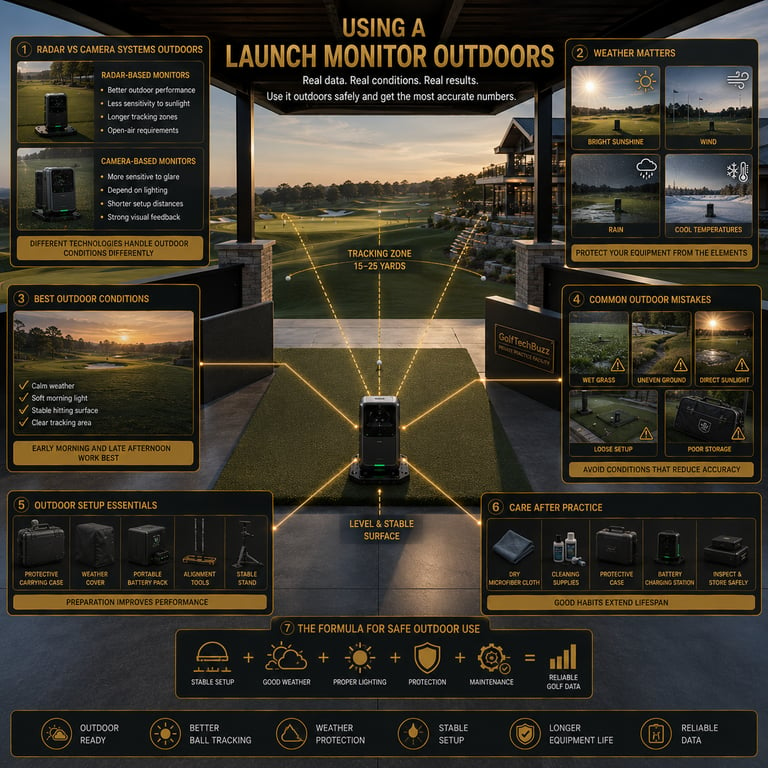
Most golf launch monitors can be used outdoors safely if protected from harsh weather and extreme temperatures.
Performance outdoors depends heavily on stable setup, decent lighting, and managing environmental factors like wind and sun glare.
Radar-based monitors usually handle outdoor use better than camera or infrared models, but all have limitations.
Follow manufacturer guidelines closely and store your gear properly after outdoor sessions to keep it in top shape.
If you’re still comparing models, our picks for the Best Golf Launch Monitors can help narrow down your options.
How Golf Launch Monitors Work: Technology Basics
Before we get into the specifics of outdoor usage, here’s a quick refresher on what’s under the hood. Golf launch monitors use radar, infrared, or high-speed cameras to track your ball and club. They spit out data like ball speed, spin rate, launch angle, and distance—essential metrics for anyone serious about improving their game.
Radar-based monitors send out microwaves that bounce off the ball mid-flight to gather data. Infrared systems use sensors to detect heat signatures, and camera-based models capture fast-motion rounds of your shot to analyze trajectory visually. Each tech works best under certain conditions, particularly lighting and environmental stability—two things that outdoor settings can sometimes challenge.
To protect those sensors and cameras from damage, take a look at Best Golf Launch Monitor Protection Systems.
Common Outdoor Usage Scenarios for Launch Monitors
Outdoors is the natural place for many of us—whether you’re hitting balls on a driving range, getting some in during a practice round, or even setting up in the backyard for a quick session. Coaches use them outside too, giving real-time feedback on swing stats during lessons.
Tournaments and practice events increasingly rely on real-time launch monitor data, even outdoors, to help players adjust. Just keep in mind the consistency of space and environment is a must. Unlike indoor simulators with known distances and controlled lighting, outdoor ranges can present uneven turf, variable lighting, and environmental distractions.
Before hauling expensive gear to the range, it’s worth asking yourself, Do You Need Protection for Your Golf Launch Monitor?
Weather Effects on Performance and Durability
If you think rain or even bright direct sunlight won’t mess with your launch monitor, think again. Here’s where a lot of guys slip up.
Rain and wind are your gear’s worst enemies outdoors. While some monitors boast basic splash resistance, leaving your device out in heavy rain or wet conditions is asking for trouble—expect compromised data and possible hardware damage. Wind can shake your setup or blow debris your way, skewing results or causing physical issues.
Sunlight is a sneaky one. Radar-based units tolerate it better but can still face interference from reflective surfaces nearby. Camera-based monitors are most affected by glare, rapid light changes, or shadows, making consistent tracking tough in harsh sun or moving clouds.
Extreme temperatures—either hot or cold—can degrade battery performance and sensor function. Most manufacturers provide operational temperature ranges that are worth sticking to if you want consistent readings.
If impacts are your main concern, check out Best Ways to Protect a Golf Launch Monitor from Shanks and Mishits.
Best Practices for Safe Outdoor Use
So how do you get the most out of your launch monitor outdoors without turning it into a headache? Here’s what works:
Always place the monitor on stable, level ground. Uneven surfaces lead to wonky data and increase the risk of gear tipping over.
Protect the device from weather exposure using covers, cases, or shaded areas. Don’t leave it out unattended during rain or extreme conditions.
Choose times of day with consistent, soft lighting—early mornings or late afternoons—and avoid direct midday sun when glare is at its worst.
Follow your manufacturer’s guidelines about operating temperature and humidity to avoid damage.
Check for firmware updates regularly, as many devices include tweaks for improved outdoor calibration.
Carry portable power solutions when hitting cold environments to offset battery drain.
After use, clean and dry your monitor and store it in a protective case to extend its lifespan.
Where you set up matters just as much as the weather, so read Where Should You Place a Launch Monitor in a Golf Simulator?
Common Mistakes to Avoid When Using Launch Monitors Outside
I’ve seen guys try this and end up frustrated or with busted gear. Here are the usual blunders:
Leaving the monitor exposed in rain or wet grass without protection. It’s a quick way to damage electronics.
Setting it directly on uneven ground, causing unstable readings and potential falls.
Ignoring device temperature specs; for example, using a monitor in freezing cold or blazing heat without taking precautions.
Expecting indoor-level accuracy outside without adjusting for lighting shifts or wind interference.
Neglecting device security, leading to falls, knocks, or even theft when unattended.
Forgetting to clean your gear after outdoor sessions, allowing dirt and moisture buildup that shortens its lifespan.
To decide between different types of protection, compare Launch Monitor Case vs Protective Shield: Which Should You Buy?
Buyer Considerations for Outdoor Launch Monitor Use
Planning to buy a launch monitor primarily for outdoor use? Keep these features on your radar:
Weather resistance: Look for models with at least some IP-rated water and dust protection; none are fully waterproof but some handle splashes better.
Portability: Lightweight, compact designs are easier to set up and move around outdoor ranges.
Durable construction: Sturdy casings and stable tripod or stand compatibility help in windy or uneven conditions.
Compatibility with outdoor calibration modes or settings is a bonus.
Battery life and power options matter if you’re out all day away from an outlet.
Radar-based units often perform better outdoors, but newer camera and infrared models are closing the gap with improved tech.
Portable units with built-in displays may also benefit from Are Launch Monitor Screen Protectors Worth It?
Maintenance and Care Tips After Outdoor Use
Your gear’s care routine after hitting the range outside can make or break longevity:
Wipe down the device with a dry, soft cloth to remove dirt, grass, and moisture before packing it away.
Avoid harsh cleaning chemicals; a gentle cleaner or electronics wipe works best.
Store your monitor in a protective case indoors, avoiding extreme temperatures or humidity.
Inspect cables and battery compartments for damage or corrosion regularly.
Recharge or swap batteries promptly; cold outdoor use can sap juice faster than you’d think.
Frequently Asked Questions About Outdoor Launch Monitor Use
Can I leave my golf launch monitor outside in the rain?
No, most launch monitors are not designed to be left in rain or wet conditions without protection. Even splash-resistant models should be covered or brought indoors to avoid damage.
How does sunlight affect the accuracy of golf launch monitors outdoors?
Sunlight can interfere with camera-based monitors more than radar-based ones due to glare and shadows. Direct bright sun can reduce tracking accuracy, so aim to practice during softer light hours.
What are the best weather conditions for using golf launch monitors outside?
Calm, dry days with mild temperatures and consistent lighting provide the best environment for outdoor use. Avoid heavy wind, rain, or extreme heat/cold.
Are there launch monitors designed specifically for outdoor use?
While many monitors are marketed for both indoor and outdoor use, few models are fully ruggedized for harsh outdoor environments. Look for devices with weather resistance and durability features if you plan regular outdoor sessions.
How much space is needed to set up a launch monitor outdoors?
It depends on the model, but generally, you want enough clear space to hit shots without obstruction and to allow the monitor the recommended distance from the ball—usually around 6-10 feet behind the ball and unobstructed views of the shot path.
Can wind influence the data collected by my golf launch monitor?
Yes, wind can affect ball flight and the stability of your monitor setup, leading to less consistent data. Secure your gear to minimize movement and try to practice on calm days for cleaner results.
What maintenance is required after using a launch monitor outdoors?
Clean off dirt and moisture, check for damage, dry the device thoroughly, and store it in a protective case. Regular maintenance prolongs device lifespan and keeps data reliable.
Is there a difference in performance between radar and camera-based launch monitors outdoors?
Radar-based monitors tend to handle outdoor conditions better due to less sensitivity to light changes. Camera-based devices can struggle with glare and shadows but offer valuable visual shot feedback when conditions cooperate.
Wrapping It Up
So can you safely use your golf launch monitor outdoors? Absolutely, but only if you respect the environment your gear needs to operate properly. Shield it from rain and wind, pick your setup spot wisely, and don’t ignore the impact of lighting and temperature. Follow a solid maintenance routine and pay attention to what your specific device’s manual says about operating outdoors.
If you take care of your launch monitor like you would your prized wedge, it’ll reward you with reliable data and plenty of practice rounds in the open air. And hey, nothing beats dialing in a shot under the sun on a crisp morning, knowing your monitor has your back—no jungles of cables, no four walls, just pure swing science.
Keep swinging, keep smoking those cigars, and keep sharpening that handicap. Your launch monitor’s ready if you are.
© 2026 GolfTechBuzz. All rights reserved.
Golf Tech Buzz
Performance Through Data
Practical guides, real-world setups, and unbiased comparisons for golfers building smarter practice environments.
General Inquiries: