

Launch Monitor Case vs Protective Shield: Which Should You Buy?
Discover when to choose a launch monitor case or protective shield to keep your device safe, portable, and accurate for your golf game.
MONITORS
Golf Tech Buzz Editorial Team - Led by AJ “Buzz” Eichman
7/11/20266 min read
If you’ve dropped a grand or two on a launch monitor, you already know they’re not your run-of-the-mill golf gadget. These things are precision instruments, packed with sensors that tell you exactly how you swing and how far your ball travels. Protecting your launch monitor isn’t just about keeping it clean—it’s about preserving functionality and accuracy so it can keep doing its job for years. Now, when it comes to keeping your investment safe, you’re mainly looking at two contenders: the solid, padded launch monitor case or the lean, mean protective shield.
Here’s the deal—both have their place. But which one suits your style of golf and how you use your device? Let’s break down what each offers, where they fall short, and how to pick the right one without wasting cash or risking damage.
To learn more about the technology you’re protecting, check out our Launch Monitors guide.
Quick Verdict
Launch monitor cases offer padded, all-around protection ideal for transport and storage.
Protective shields provide impact resistance and environmental defense during play, without the bulk.
Choose a case if you’re moving your device a lot or storing it with care.
Pick a shield if you want lightweight protection on the course or range without encasing the whole thing.
If you’re still shopping for a device, our guide to the Best Golf Launch Monitors can help narrow down your options.
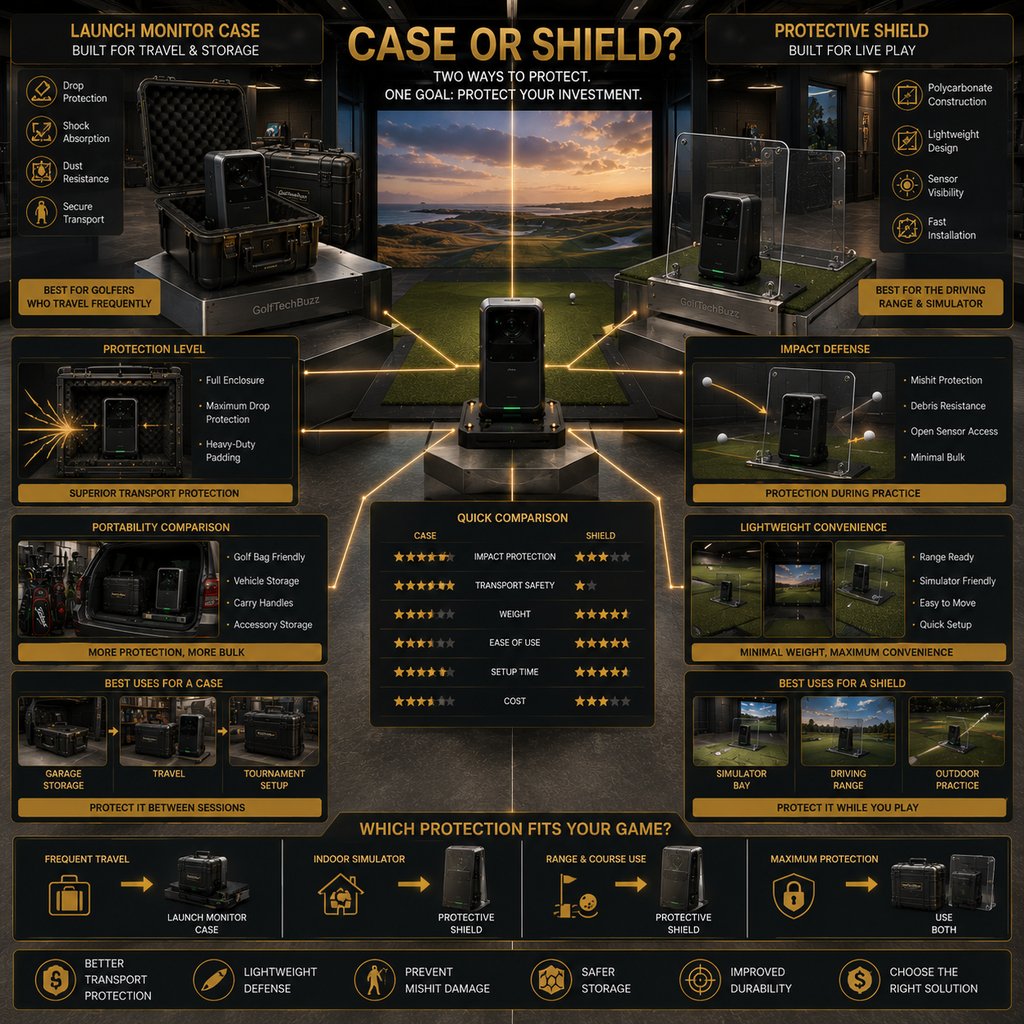
What Is a Launch Monitor Case? Features and Benefits
Think of a launch monitor case as the bodyguard you hire to safely tote your device around town. These cases come with molded EVA foam or hard-shell exteriors and plush internal padding, designed to soak up shocks if you happen to bump into something or especially if you accidentally drop it. The padding also keeps dust and moisture at bay, which is no small thing if you’re hauling your gear in and out of cars or storage rooms.
Cases often have compartments for accessories like cables, chargers, or mounts—kind of like a deluxe golf bag for your tech. They’re built for portability but do tend to be heavier and bulkier than shields. That’s the trade-off: more protection and organization for a little less convenience on the move.
If you’re the type who shuffles your launch monitor from the garage to the driving range, then back home for simulator nights, a good case will save your bacon. It’s peace of mind that your device won’t get banged up in transit.
You can compare specific products and enclosures in Best Golf Launch Monitor Protection Systems.
What Is a Protective Shield? Features and Benefits
Now, protective shields are a different breed—not a suitcase, but more like a suit of armor that your launch monitor wears while you’re swinging away. Usually made from impact-resistant plastics like polycarbonate, these shields snap or clip onto your device to guard it during live use.
They’re lighter and less cumbersome than cases, so you don’t feel like you’re lugging around a mini gym bag while hitting balls. Protective shields excel at deflecting errant impacts—think of wayward golf balls bouncing around cluttered ranges or accidental whacks from clubs. They also help keep the elements and debris off your device, which is handy outdoors or at dusty ranges.
One key point: shields don’t wrap your launch monitor in a full protective cocoon. They’re designed not to block sensors or interfere with signal transmission, so they’re slim and specifically shaped. This means they won’t protect from every angle, but they guard the most vulnerable parts during active use.
Before buying anything, it’s worth asking yourself, Do You Need Protection for Your Golf Launch Monitor?
Direct Comparison: Protection Level, Portability, and Use Scenarios
Protection Level
If you drop your launch monitor from four feet up, a case is going to absorb the shock better than a shield. That’s because the internal padding and rigid shell disperse impact forces. Shields protect best against smaller bumps and scratches but won’t stop big bang damage if you’re clumsy.
Portability
Cases are heavier and bulkier by design. You get full-enclosure protection but may want to think twice if you’re hopping between lots of locations on foot. Shields are featherweights in comparison and keep your monitor protected with zero fuss during play, without interfering with setup or takedown.
Use Scenarios
Transport and storage: cases win hands down. Protect your precious gear from accidental drops in the car or crowded garages.
On-course or range use: shields shine here, providing protection without scraping sensor accuracy or adding bulk.
Indoor simulator setups: if your launch monitor mostly stays put, a case can keep it in pristine shape between seasons or leagues, but a shield helps fend off incidental knocks from carts, bags, or crew.
If stray shots are your biggest concern, read Best Ways to Protect a Golf Launch Monitor from Shanks and Mishits.
How to Choose Based on Your Golf Setup and Usage Patterns
Here’s where I tell you to really think about how you roll. If your launch monitor is your daily golf buddy who gets tossed in and out of car trunks, across rutted parking lots, and hauled inside and out of home simulators, shelling out for a rugged, well-padded case is a no-brainer.
But if you’re more into keeping it on the range or out on the course where conditions aren’t always pristine—dust, rain, stray balls flying—you’ll want a protective shield. It lets you protect the device against everyday bumps while maintaining sensor function without adding much weight.
Many pros and coaches I know actually use both—a reliable launch monitor case for transport and storage, and a custom-fit protective shield when it’s go-time on the range or course. If your budget allows and you handle your device in varied environments, owning both is the smartest move.
Your setup location matters, which is why you should also consider Where Should You Place a Launch Monitor in a Golf Simulator?
Common Mistakes to Avoid When Buying Protection for Your Launch Monitor
Thinking a protective shield equals the protection level of a padded case. Trust me, it’s not the same. If you drop your device, a shield won’t save you from serious damage.
Skipping dimension and compatibility checks. Not all cases and shields fit every model. Double-check sizes and mounting options before you buy, or you’ll be stuck with gear that doesn’t snap right or fit your monitor like a glove.
Ignoring portability. Some cases are heavy and bulky, which can be a pain if you carry your gear daily. Don’t pick a tank if you’re juggling multiple bags to the range.
Using only a case during transport but no protection during play. Your launch monitor faces risks on the course too—those stray balls and club mishaps add up.
Overlooking environmental factors. Dust, rain, and even sweat can degrade your device if not protected during use, not just in storage.
Going for the cheapest option without evaluating material quality. Bad cases or shields can break fast and leave your monitor vulnerable.
If you regularly practice outside, be sure to read Can Golf Launch Monitors Be Used Outdoors Safely?
Frequently Asked Questions About Launch Monitor Protection
What is the difference between a launch monitor case and a protective shield?
A case fully encloses your launch monitor with padding and a hard exterior, ideal for transport and storage, while a protective shield clips onto the device to guard it against impacts and debris during use without full enclosure.
Can I use both a case and a protective shield together?
Absolutely. Using a case when transporting or storing your monitor and a shield during live play offers the best overall protection strategy.
Which option offers better protection from drops or accidental impacts?
Cases excel at protecting from drops due to hard shells and internal padding. Shields are better at protecting from minor bumps and scratches but don’t handle drops as well.
Are these protective accessories compatible with all launch monitor brands?
Not necessarily. Compatibility varies by model and brand, so always check dimensions and mounting features to ensure a proper fit.
How portable are launch monitor cases compared to shields?
Cases tend to be heavier and bulkier, while shields are lightweight and slim, making them easier to carry around during play.
Do protective shields affect the accuracy or function of the launch monitor?
Quality shields are designed not to obstruct sensors or signals, so they generally do not impact accuracy. However, choosing a poorly designed shield may interfere, so pick trusted options.
What factors should I consider when choosing between a case or shield?
Consider how often you transport your launch monitor, where you use it, protection needs against drops or impacts, weight preferences, and budget.
Are there recommended brands or materials for durable launch monitor protection?
Look for cases with EVA foam padding and hard-shell exteriors from established brands. For shields, polycarbonate models with good reviews for impact resistance and precise fit are best.
Additional Tips for Maintaining Your Launch Monitor’s Durability
Always clean your launch monitor and protective gear regularly to prevent dust and sweat buildup.
Store your launch monitor in a climate-controlled environment to avoid extremes of temperature and humidity.
Handle your gear with care but prepare for inevitable bumps—use the appropriate protection accordingly.
Consider investing in quality accessories to secure your launch monitor firmly on carts or mounts during play.
For portable launch monitors with built-in displays, you may also want to know Are Launch Monitor Screen Protectors Worth It?
So, what’s the takeaway from all this? If you’re hauling your monitor around a lot, the padded, portable launch monitor case is your best bet to dodge dents, drops, and dust. If you’re mostly using it out on the range or course, a protective shield offers lightweight, practical defense against everyday hazards without getting in your way. And if you want to play it safe, running both is the way to go—one for travel, one for play. Either way, don’t skimp on protecting your launch monitor; it’s the heart of your golf game data, so keep it sharp, safe, and ready to deliver.
© 2026 GolfTechBuzz. All rights reserved.
Golf Tech Buzz
Performance Through Data
Practical guides, real-world setups, and unbiased comparisons for golfers building smarter practice environments.
General Inquiries: